No Email. No Laptop. No Wi-Fi. A Day at the Office in 1975 Was a Completely Different Universe
No Email. No Laptop. No Wi-Fi. A Day at the Office in 1975 Was a Completely Different Universe
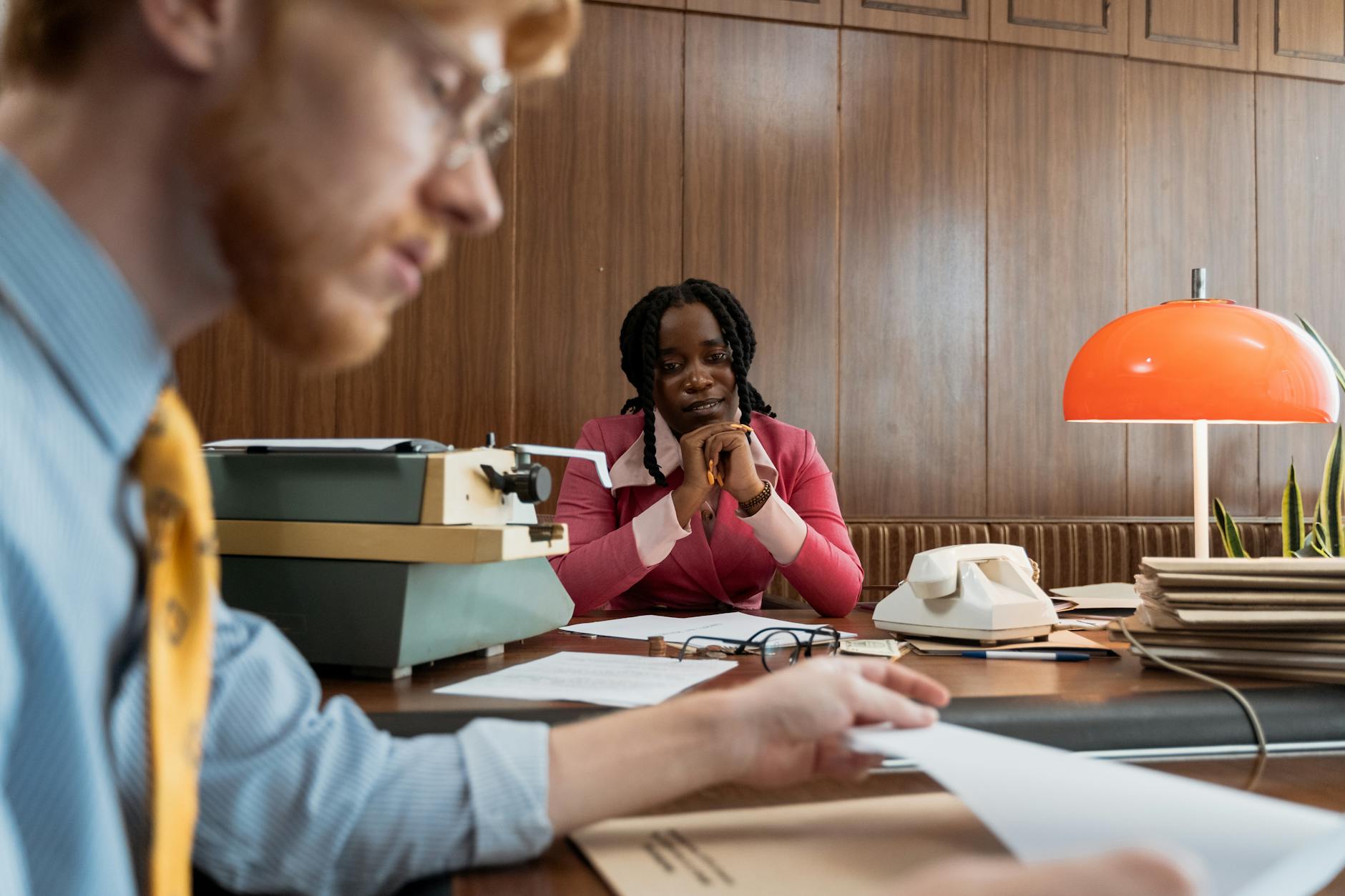
It's 8:45 on a Tuesday morning in 1975. You're an office worker at a mid-sized company in Chicago — maybe insurance, maybe accounting, maybe a law firm. You hang up your coat, sit down at your desk, and the first thing you do is not check your email, because email doesn't exist yet. You don't glance at your phone, because your phone is a large beige object bolted to the desk that can only make and receive calls.
Instead, you open your in-tray.
There's a stack of memos — physical paper memos, typed up and distributed by hand or internal mail — and a few phone message slips from calls that came in yesterday afternoon. You pick up the receiver, start returning calls, and your workday is underway.
It sounds almost quaint. But spend a little time inside that 1975 workday and you start to realize it wasn't just the tools that were different. The entire rhythm, pace, and culture of work operated on fundamentally different assumptions.
The Pace of Communication Was Measured in Days, Not Seconds
In 1975, sending a document to a colleague in another city meant one of three things: you mailed it, you sent it by courier, or you read it to them over the phone. The fax machine existed but was expensive, slow, and far from universal. A business letter sent from Chicago to a client in New York could take three to four days round trip — and that was considered normal and acceptable.
This had a profound effect on how decisions were made and how urgency was defined. Without the ability to fire off a message and expect a reply within the hour, people planned further ahead. Deadlines were set with realistic lag time built in. Meetings — actual in-person meetings — were the primary mechanism for moving things forward quickly.
The telephone was the fastest communication tool available, and it was used accordingly. Phone calls were more substantive, more deliberate, and often longer than what most people bother with today. If you needed to talk something through with someone, you called them. There was no texting a quick question, no sending a voice note, no firing off a three-line email.
The Physical Office Was a Different Animal
The open-plan office — that now-ubiquitous landscape of rows of desks, no walls, and constant ambient noise — was not yet dominant in 1975. Many offices were still organized around private or semi-private spaces. Secretaries and administrative staff managed the flow of paperwork, correspondence, and scheduling in ways that today's workers largely handle themselves.
The tools on a typical desk in 1975 included a typewriter (electric, if you were lucky), a Rolodex, a physical calendar or day planner, a stapler, carbon paper, and correction fluid. The IBM Selectric typewriter, introduced in 1961, was considered a genuine productivity marvel. Making copies meant using a mimeograph or early photocopier — both slower and more temperamental than anything in a modern office.
If you needed to research something, you went to the filing cabinet, the company library, or you picked up the phone. There was no Googling an answer in thirty seconds. Background research for a report might take days of actual legwork.
Working Hours and the Unspoken Rules
The standard American workweek in 1975 was Monday through Friday, roughly 9 to 5, and that was largely what it was. Work did not follow you home in any meaningful way. There was no work email on your phone because there was no phone in your pocket. When you left the office, you were genuinely unreachable unless someone called your home landline.
This created a cleaner psychological boundary between work and personal life that many workers today openly envy. But it came with its own pressures. Face time in the office mattered enormously. Leaving at exactly 5:00 PM every day might be noticed. Advancement was often tied to visibility and relationships built in person, which meant office politics were even more immediate and physical than their modern equivalent.
Women in the 1975 office faced a workplace culture that, by today's standards, would be almost unrecognizable in its casual acceptance of inequality. Opportunities for advancement were sharply limited for most women, and the professional norms of the era reflected that in ways both overt and subtle.
The Productivity Question Nobody Agrees On
Here's where it gets genuinely complicated. Modern workers have access to tools that would have seemed like science fiction in 1975. A laptop computer today has more processing power than entire floors of mainframe equipment from that era. The internet puts virtually all of human knowledge within reach in seconds. Collaboration software lets teams work across time zones in real time.
And yet — many workers report feeling more overwhelmed, more distracted, and less focused than ever. The always-on nature of modern work, the expectation of instant responses, the blurring of office and home — these are real costs that the 1975 office worker simply didn't carry.
There's a reasonable argument that the tools got better while certain aspects of the experience got harder. That the pace of communication accelerated faster than human beings were ever really designed to handle.
Same Job, Different Planet
The American office worker of 1975 was doing recognizable work — analyzing, communicating, managing, creating — but doing it inside a completely different operating system. Slower, yes. More paper-dependent, absolutely. But also more bounded, more deliberate, and in some ways more human in its rhythms.
Neither era has it entirely figured out. But understanding just how different work used to look makes it a lot easier to ask the right questions about how we want it to look going forward.