When Your Paperboy Was Your CNN: How America Lost Its Hometown Voice
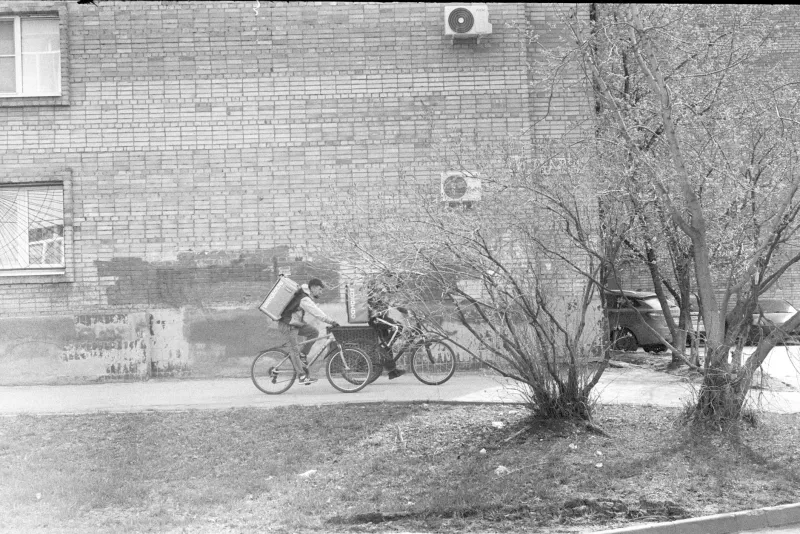
The Kid Who Knew Your Street
Every morning at 5:30 AM, Tommy Rodriguez wheeled his bike out of the garage and loaded up canvas bags with 127 copies of the Riverside Daily Press. He knew exactly which houses wanted the paper on the porch versus the driveway, which dogs would chase him, and which subscribers always tipped at Christmas.
More importantly, Tommy was delivering news about people his family actually knew. The high school football scores featured kids from his neighborhood. The city council debates affected the streets he rode every day. The business openings and closings happened in the downtown where his mom shopped.
That was 1985. Tommy's route, like thousands of others across America, was part of a news ecosystem that connected communities to themselves in ways that seem almost quaint today.
When News Had a Neighborhood
Local newspapers in the 1970s and 80s operated on a simple premise: communities needed to know about themselves. The Riverside Daily Press employed twelve reporters who covered everything from school board meetings to high school graduations, from new business licenses to church fundraisers.
The newsroom knew its audience personally. Editor Margaret Chen lived three blocks from the paper's office. Sports reporter Dave Martinez coached Little League on weekends. The photographer, Susan Walsh, had documented three generations of local families.
This wasn't just professional familiarity—it was accountability. When the paper made a mistake, the reporters had to face their neighbors at the grocery store. When they missed a story, someone's mom would call the newsroom directly.
The Ecosystem That Built Community
Local journalism in its heyday created something larger than information delivery—it built civic identity. The weekly newspaper didn't just report on city council meetings; it made those meetings matter by explaining how decisions would affect local families.
Friday night football games weren't just entertainment; they were community events that the newspaper helped elevate into shared experiences. When the local paper published high school honor rolls, graduation photos, and engagement announcements, it reinforced the idea that individual achievements mattered to the whole community.
Local businesses understood this ecosystem and supported it. The hardware store, the bank, and the car dealership bought ads not just to sell products, but to maintain their connection to the community conversation. The newspaper was the town square, and advertising was the price of admission.
The Slow-Motion Collapse
The internet didn't kill local journalism overnight—it strangled it slowly, cutting off revenue streams one click at a time.
Classified ads, once the financial backbone of local papers, migrated to Craigslist. Local business advertising shifted to Google and Facebook, where algorithms promised better targeting than a hometown paper could offer. National chains replaced local businesses that had sustained community newspapers for decades.
By 2005, papers like the Riverside Daily Press were cutting staff. By 2010, they were cutting coverage. By 2015, many had closed entirely or become weekly publications with skeleton crews.
The statistics tell a devastating story: since 2005, America has lost more than 2,100 newspapers, most of them weekly papers serving small communities. Nearly 200 counties now have no local newspaper at all.
What Algorithms Can't Replace
Social media promised to democratize information and connect communities more effectively than traditional media ever could. Instead, it created echo chambers where national outrage drowns out local concerns.
Try finding information about your city council meeting on Facebook. Search for coverage of your local school board election on Twitter. Look for in-depth reporting about your county's budget decisions on Instagram. The platforms that replaced local newspapers excel at viral content and political polarization, but fail completely at the mundane civic coverage that keeps democracy functioning at the community level.
Algorithmic news feeds prioritize engagement over importance, emotion over information. A national political scandal generates more clicks than a local zoning dispute, even though the zoning decision might have more direct impact on users' daily lives.
The Accountability Vacuum
When the Riverside Daily Press closed in 2016, something subtle but crucial disappeared from the community: institutional memory and ongoing accountability.
Local officials who once faced regular questioning from reporters now operate with minimal scrutiny. School board meetings that once drew coverage now proceed with only the participants present. Business deals and development projects that would have generated investigative coverage now happen in relative darkness.
The paper's archives, containing 50 years of community history, were donated to the local library, where they sit largely undigitized and unsearchable. Decades of institutional knowledge about local politics, business relationships, and civic patterns vanished when the last reporter cleaned out her desk.
The Facebook News Desert
In communities without local newspapers, Facebook groups and neighborhood apps have attempted to fill the information void. But social media creates a fundamentally different kind of civic conversation.
Local Facebook groups excel at lost dog alerts and restaurant recommendations, but struggle with complex civic issues. Without professional journalists to investigate and contextualize, important local stories often get reduced to rumor, speculation, and partisan interpretation.
The town that once shared a common set of facts about local issues now fragments into separate information bubbles, each reinforcing its own version of local reality.
The Democracy Deficit
Research consistently shows that communities without local newspapers experience decreased civic engagement, higher government costs, and increased corruption. When nobody's watching, accountability disappears.
Voter turnout in local elections plummets when there's no newspaper to explain what's at stake. Municipal bond ratings suffer when there's no journalist tracking government finances. Local businesses struggle to connect with customers when there's no central forum for community conversation.
The loss of local journalism doesn't just change how communities get information—it changes how they function as communities.
Fighting Back
Some communities are experimenting with solutions. Nonprofit news organizations, community-funded journalism, and digital-first local outlets are trying to rebuild local news ecosystems.
But these efforts face the same economic challenges that killed their predecessors. Local journalism was never particularly profitable; it was sustained by a broader ecosystem of local business support that has largely moved online.
The Missing Voice
Tommy Rodriguez is 45 now, working in tech support for a regional hospital system. His old paper route serves a neighborhood where most residents get their news from national sources that have never heard of Riverside.
The high school still plays football on Friday nights, but there's no sports reporter to capture the stories that turn teenage athletes into local legends. The city council still meets, but there's no journalist to translate municipal jargon into language that helps citizens understand what's happening to their community.
The paperboy who once connected neighborhoods to themselves has been replaced by algorithms that connect everyone to everything except the place where they actually live. We gained access to unlimited information and lost touch with the stories that matter most: the ones happening right next door.
In the end, the death of local journalism didn't just change how Americans get their news—it changed how they see themselves as members of communities worth knowing about.