Before Your Phone Knew Where You Were, Getting Lost Was an Unavoidable Part of Every Road Trip
Before Your Phone Knew Where You Were, Getting Lost Was an Unavoidable Part of Every Road Trip
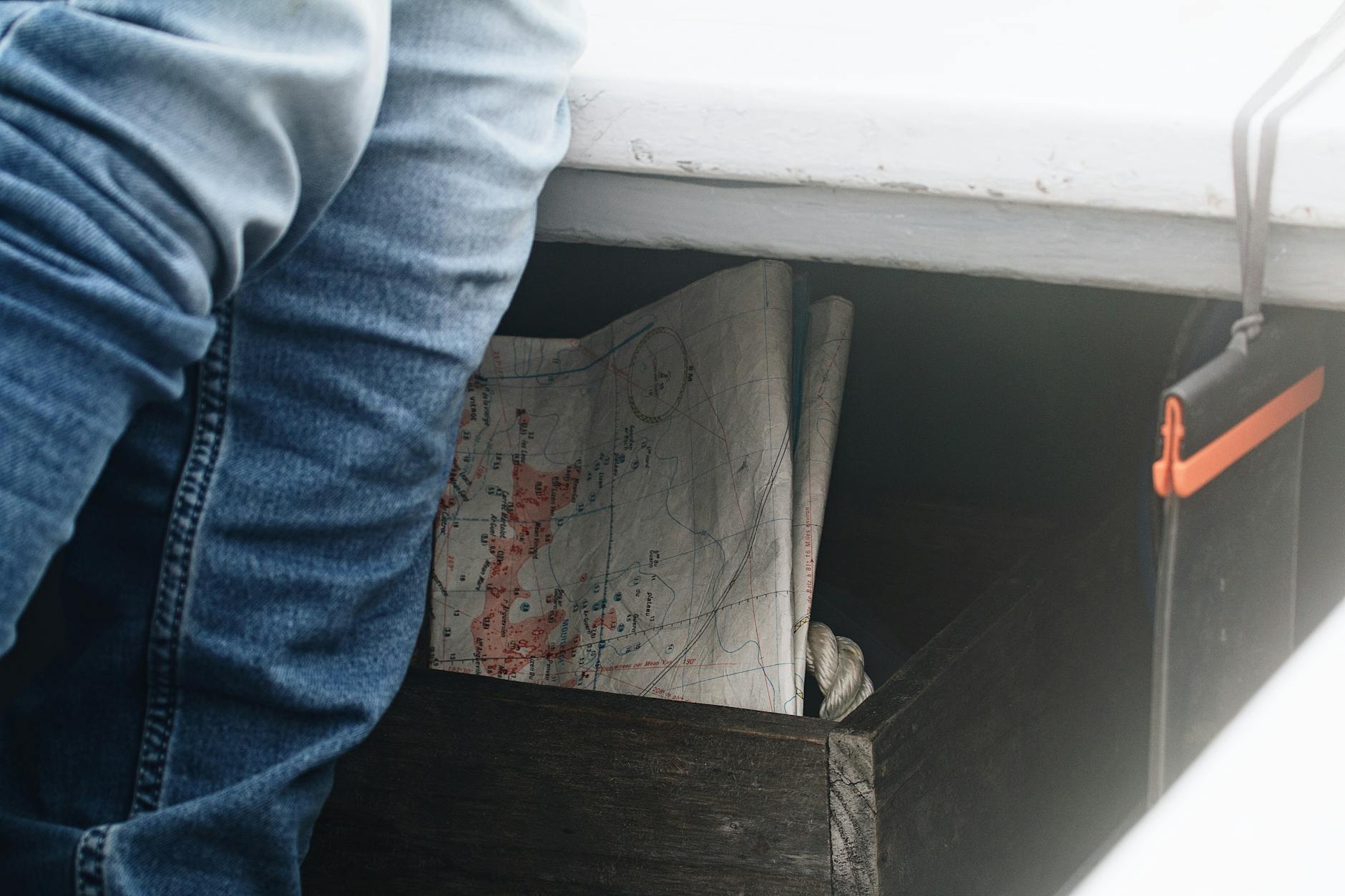
Somewhere in a drawer, a closet, or a forgotten corner of a garage, there's probably a folded road map that hasn't been opened in twenty years. Creased down the middle, soft at the edges, maybe with a coffee ring on the corner — a relic of an era when knowing where you were going required actual preparation, real-time problem-solving, and a tolerance for uncertainty that today's drivers have almost entirely lost the need for.
Before GPS, before Google Maps, before the calm digital voice that tells you to "turn right in 500 feet," navigating the American road was a genuine skill. And for millions of drivers across several decades, it was also a genuine source of stress, adventure, and the occasional spectacular wrong turn.
The Pre-Trip Ritual That No Longer Exists
Planning a road trip in, say, 1988 started days before you ever got in the car. If you were organized, you'd spread a road atlas across the kitchen table — the Rand McNally was the gold standard — and trace your route with a highlighter or a finger, noting the highway numbers, the state line crossings, the towns where you'd stop for gas.
Serious travelers joined AAA, and for good reason. The American Automobile Association offered a service called the TripTik: a custom-built, spiral-bound booklet of strip maps, assembled specifically for your planned route, with your path highlighted in orange and notes about road conditions, construction, and points of interest. Getting a TripTik meant visiting a AAA office in person, sitting with a travel counselor, and walking out with something that felt almost like a mission briefing.
You also wrote things down. Exit numbers. Landmark intersections. The name of the motel where you'd made a reservation — a reservation confirmed by phone call, with a paper receipt mailed to your house. There was no checking your itinerary on a screen. The itinerary lived on a piece of paper in the glove compartment.
Gas Stations Were the Original Navigation Apps
Here's something that would genuinely surprise a driver who came of age after smartphones: gas stations were navigation hubs. Not metaphorically — literally. Pulling into a filling station with a question about directions was completely normal, expected behavior. Attendants and cashiers gave directions constantly, and many of them were genuinely good at it.
The directions you received were a specific art form: landmark-based, time-based, and highly local. "Go about three miles until you see the old grain elevator, then take a left at the light by the Dairy Queen." Written down correctly, this worked. Misheard, misremembered, or applied to the wrong intersection, it could send you twenty miles in the wrong direction before you realized something had gone wrong.
And gas stations sold maps. Not as novelty items — as essential supplies. Pulling off an interstate to buy a state map because you'd crossed a border and your current map ended was a completely routine part of long-distance travel.
The Payphone and the Art of the Rescue Call
Before cell phones, the roadside payphone was the lifeline of the lost traveler. They were everywhere — at gas stations, rest stops, highway exits, and outside diners — and knowing where they were mattered.
If you got truly disoriented, the protocol was to find a payphone, call home, and have someone look up where you were on their map while you described what you could see. "I'm at the junction of Route 9 and something called County Road F, there's a grain silo to my left" — and the person on the other end would try to locate that intersection in an atlas while you waited, feeding quarters into the phone.
For families on road trips, this was sometimes a tense production. For solo drivers in unfamiliar territory after dark, it could be genuinely unnerving. The feeling of being actually, properly lost — not "recalculating" lost, but where am I lost — is something an entire generation of Americans experienced and that younger drivers today have largely never had to confront.
What the Open Road Felt Like Without a Safety Net
There's a version of this story that's purely nostalgic — the romance of unfolding a map on the hood of the car, the satisfaction of figuring it out yourself, the unexpected discovery of a small town you never would have found if you hadn't taken the wrong exit. And that version is real. Pre-GPS road travel had a texture and an unpredictability that many people genuinely miss.
But let's be honest about the other version, too. The arguments over directions. The missed exits on unfamiliar interstates. The forty-five minutes of driving in circles through a city because the handwritten directions didn't account for a one-way street. The particular anxiety of running low on gas in a rural area with no idea how far the next station was.
Navigation required mental effort that is now fully outsourced to a device. Drivers held spatial maps of their routes in their heads, tracked highway numbers actively, and made real-time decisions with incomplete information. It was, in a very practical sense, cognitively demanding in a way that modern driving simply is not.
The Turn That Changed Everything
GPS receivers became commercially available to consumers in the 1990s, but they were expensive, clunky, and far from universal. The real shift came in the mid-2000s, when dedicated GPS units from companies like Garmin and TomTom became affordable enough for ordinary drivers — and then again around 2008–2010, when smartphones with built-in navigation made the whole apparatus essentially free.
Within a few years, an entire ecosystem of skills, habits, and rituals quietly disappeared. TripTiks became curiosities. Gas station map racks emptied out and weren't refilled. The art of giving landmark-based directions faded. A generation of children grew up riding in back seats without any idea where they were going, watching screens, trusting the voice.
The folded map in the glove compartment became a relic. And somewhere in that transition, the road trip became a fundamentally different kind of journey — more efficient, less anxious, and just a little less wild.