When News Had a Schedule: How Americans Lived with Information Breaks Before Phones Became Our Constant Companions
Picture this: You're sitting in a doctor's waiting room in 1987. Your appointment is running late, and you have nothing to do but flip through a six-month-old copy of Time magazine or stare at the motivational poster of a kitten hanging from a tree branch. There's no buzzing phone in your pocket delivering breaking news alerts. No Twitter feed to scroll through. No Instagram stories to watch. Just you, your thoughts, and the sound of the receptionist's typewriter.
This wasn't considered deprivation. It was just life.
The Rhythm of Scheduled Information
For most of American history, news arrived on a predictable schedule. The morning paper landed on your doorstep with a satisfying thud. The evening news came on at 6:30 PM sharp, anchored by trusted voices like Walter Cronkite or Tom Brokaw. Weekly magazines like Newsweek and U.S. News & World Report provided deeper dives into the week's events.
This wasn't just about media consumption—it was about the rhythm of awareness itself. Americans lived in distinct information cycles. You caught up with the world in the morning over coffee, got an update during the evening broadcast, and filled in the gaps with weekly or monthly publications.
Between these scheduled information breaks? Life happened without constant commentary.
The Lost Art of Waiting
Think about what waiting used to mean. A delayed flight meant hours of genuine boredom—maybe you'd strike up a conversation with a stranger, read a paperback novel, or simply watch people walk by. Waiting for the bus meant studying the faces around you or letting your mind wander.
These weren't seen as wasted moments. They were just part of the human experience—spaces where thoughts could percolate, where observations could form, where the mind could rest between the day's scheduled doses of information.
Today, a thirty-second elevator ride feels like an eternity without checking your phone. We've essentially eliminated waiting as a concept, replacing it with micro-bursts of news consumption, social media updates, and digital stimulation.
When Breaking News Actually Broke
In the pre-smartphone era, breaking news was genuinely breaking. When the Challenger disaster happened in 1986, most Americans didn't learn about it until they got home and turned on the evening news, or until someone told them in person. Major events created shared moments of discovery—entire offices gathering around a single television, strangers discussing headlines at the newsstand.
Contrast this with today, where news breaks in real-time across dozens of platforms. The Boston Marathon bombing in 2013 unfolded live on Twitter, with amateur footage and eyewitness accounts streaming faster than traditional media could process. We experience major events not as shared revelations but as individually customized information streams.
The Commuter's Journey
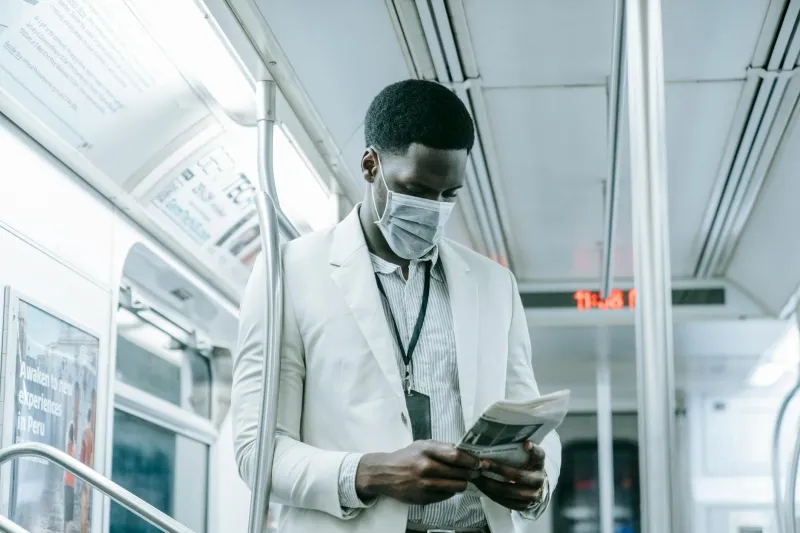
Nothing illustrates this shift better than the American commute. In 1985, a train car was filled with people reading newspapers—the rustle of turning pages, the occasional sharing of sections, the quiet focus of people absorbing their daily dose of information together.
Walk through a subway car today, and you'll see dozens of people staring at individual screens, each consuming a personalized feed of news, entertainment, and social media. The shared experience of news consumption has been replaced by algorithmic isolation.
That 1985 commuter finished reading the paper and then... nothing. They looked out the window, thought about their day, maybe dozed off. Their information intake was complete until the evening broadcast.
The Anxiety of Constant Awareness
This shift has created something previous generations never experienced: the anxiety of potentially missing something important. In 1980, if something major happened while you were at work, you'd learn about it when you got home. There was no expectation of real-time awareness of global events.
Today, being disconnected for even a few hours can feel like informational negligence. We've created a world where not knowing what's happening right now feels irresponsible, even though most "breaking news" has zero impact on our daily lives.
The Attention Revolution
Perhaps most significantly, we've fundamentally altered what it means to pay attention. Pre-smartphone Americans had longer attention spans not because they were more disciplined, but because sustained focus was the default state. Reading a newspaper required fifteen to thirty minutes of continuous attention. Watching the evening news meant sitting through twenty-two minutes of content without interruption.
Now, our attention is fragmented into seconds-long bursts. We scan headlines, swipe through stories, and jump between topics at a pace that would have seemed frantic to previous generations.
What We've Gained and Lost
This transformation isn't entirely negative. Today's Americans are arguably more informed about global events than any generation in history. We can access diverse perspectives, fact-check claims in real-time, and stay connected to developing stories in ways that would have seemed magical to our predecessors.
But we've also lost something profound: the experience of genuine downtime, the ability to be truly present in idle moments, and the shared rhythm of collective information consumption.
The waiting room used to be just that—a room where you waited. Now it's another venue for news consumption, social media checking, and digital stimulation. We've gained constant connection to the world's information, but we've lost the simple human experience of being alone with our thoughts.
In trading scheduled news for constant updates, we didn't just change how we consume information. We rewired the basic rhythm of human awareness itself.