When Words Traveled Slowly and Mattered More: The Lost Art of Letters Worth Waiting For
The Ritual of Careful Words
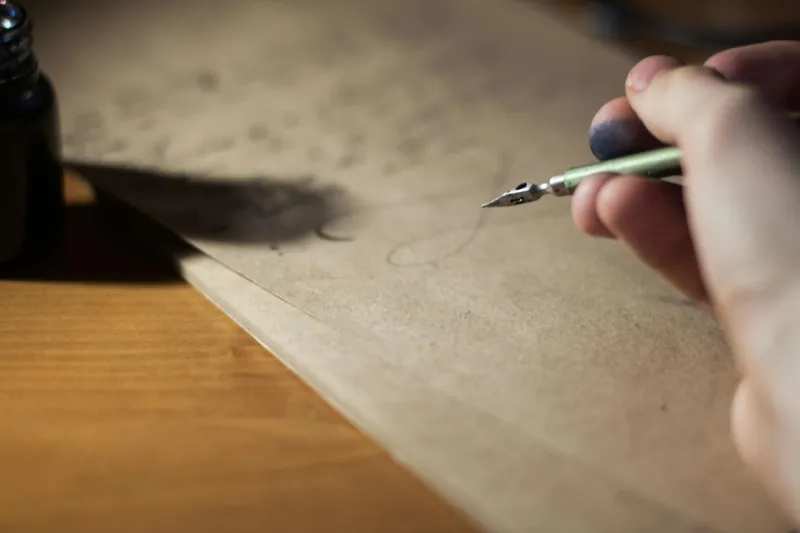
Every Sunday evening in 1955, millions of Americans sat down at kitchen tables across the country to perform a weekly ritual that would seem almost foreign today. They pulled out sheets of good stationery, uncapped fountain pens, and began the careful process of composing letters to distant family and friends. Each word was chosen deliberately, each sentence crafted with the knowledge that this piece of paper would be the primary connection between two lives for weeks to come.
Letter writing wasn't just communication – it was an art form that required patience, thoughtfulness, and genuine skill. People kept correspondence sets as treasured possessions, with matching paper and envelopes stored in special boxes. The act of writing by hand forced a natural pace that encouraged reflection and careful consideration of every thought.
Families would gather around as letters were read aloud, turning distant news into shared experiences. A letter from cousin Mary in California or Uncle Frank in the Army became an event that brought everyone together, creating moments of connection that lasted far beyond the reading.
The Economics of Thoughtful Communication
Sending a letter required real investment – not just the three-cent stamp, but the time, materials, and emotional energy that went into each piece of correspondence. This cost created a natural filter that made every letter meaningful. People didn't dash off casual notes about mundane daily activities; they saved their thoughts, collected their news, and crafted messages worthy of the effort required to send them.
The delay between sending and receiving created a unique rhythm of communication. You might write a letter on Monday, knowing your recipient wouldn't read it until the following week, and you wouldn't see their response for another two weeks after that. This forced conversations to develop slowly, with each exchange building on the last in ways that required genuine memory and attention.
Letter writers developed skills that have largely disappeared from modern communication. They learned to anticipate questions, provide context, and create complete thoughts that could stand alone without immediate clarification. The inability to quickly correct misunderstandings made clarity and precision essential.
The Waiting That Made Messages Matter
The anticipation between letters created an emotional intensity that instant communication can't replicate. Checking the mailbox became a daily ritual filled with hope and expectation. When a letter finally arrived, especially from someone important, it was treated with reverence – opened carefully, read multiple times, and often kept for years.
People developed relationships with their postal carriers, who became unofficial messengers of joy and sorrow. Rural mail delivery meant that the postman might be the only regular connection to the outside world, making their daily visits genuinely significant events.
The physical nature of letters made them permanent in ways that digital messages aren't. Families kept shoeboxes full of correspondence, creating accidental archives of their lives and relationships. These letters became treasures that could be rediscovered years later, providing windows into past selves and forgotten moments.
When Distance Created Intimacy
Paradoxically, the difficulty of long-distance communication often made relationships stronger rather than weaker. Because contact was limited and precious, people made it count. Letters between sweethearts became love poems, filled with longing and careful expressions of emotion that took hours to compose and days to deliver.
Families separated by geography developed rich traditions around correspondence. Parents would write detailed letters to children away at college, sharing neighborhood news, family gossip, and parental wisdom in carefully crafted packages that arrived like care packages for the soul. These letters often became more intimate and thoughtful than daily phone calls ever could be.
The formality of letter writing encouraged people to share their deeper thoughts and feelings. The process of putting pen to paper somehow made it easier to express emotions that might have been difficult to speak aloud, creating a unique form of intimacy through distance.
The Instant Everything Revolution
Today's communication landscape would be incomprehensible to someone from the letter-writing era. We send messages faster than thoughts, often hitting "send" before we've fully formed our ideas. The average American now sends and receives hundreds of digital messages daily, but most disappear into the noise without creating lasting impact or meaningful connection.
The expectation of immediate response has created a new form of social anxiety. Being "left on read" for a few hours can trigger the kind of worry that our grandparents reserved for letters that were weeks overdue. We've gained speed but lost the comfortable patience that came with knowing communication naturally took time.
Modern messaging encourages quick, fragmented exchanges rather than complete thoughts. Conversations happen in real-time bursts of incomplete sentences, emoji reactions, and contextless references that make sense in the moment but create no lasting record of genuine communication.
The Paradox of Connection
We're more connected than ever before, yet surveys consistently show increasing rates of loneliness and social isolation. The ability to reach anyone instantly has somehow made our communications feel less special, less intentional, and less meaningful. When everything is urgent, nothing feels important.
The art of crafting complete thoughts has been replaced by stream-of-consciousness messaging that mirrors our internal mental chatter rather than our considered opinions. We share more information about our daily lives but reveal less about our deeper selves.
The permanent nature of digital communication creates its own problems. While letters were kept as treasures, digital messages are archived as potential evidence. The knowledge that everything we write might be screenshot, forwarded, or saved forever has made us more cautious about authentic expression.
What Slowness Taught Us
The enforced patience of letter writing taught valuable lessons about communication that we've largely forgotten. When you couldn't immediately clarify a misunderstanding, you learned to write more clearly in the first place. When you couldn't send multiple messages throughout the day, you learned to make each one count.
The ritual of letter writing also provided natural breaks for reflection and consideration. The time it took to write by hand created space for thoughts to develop and mature before being shared. This led to more thoughtful, complete, and often more honest communication than our rapid-fire digital exchanges.
Most importantly, the rarity and effort required for distant communication made people treasure it in ways we no longer do. A letter was a gift of time and attention that recipients understood and valued accordingly.
The Speed We've Lost
In gaining the ability to communicate instantly, we've lost something essential about human connection. The anticipation, the careful crafting of thoughts, the joy of receiving something created specifically for us – these elements made communication feel like an art form rather than a utility.
We can now reach anyone, anywhere, anytime, but we've somehow forgotten how to say anything worth remembering. Our messages travel at the speed of light but carry less weight than words that once traveled by horse and rail.
The letters our grandparents saved in shoeboxes told stories, preserved relationships, and created lasting records of human connection. Our text messages, for all their convenience, mostly document the mundane rather than the meaningful, leaving us more connected but somehow less heard than when words traveled slowly and mattered more.