When Your Doctor Was Part of the Family: How American Medicine Lost Its Personal Touch
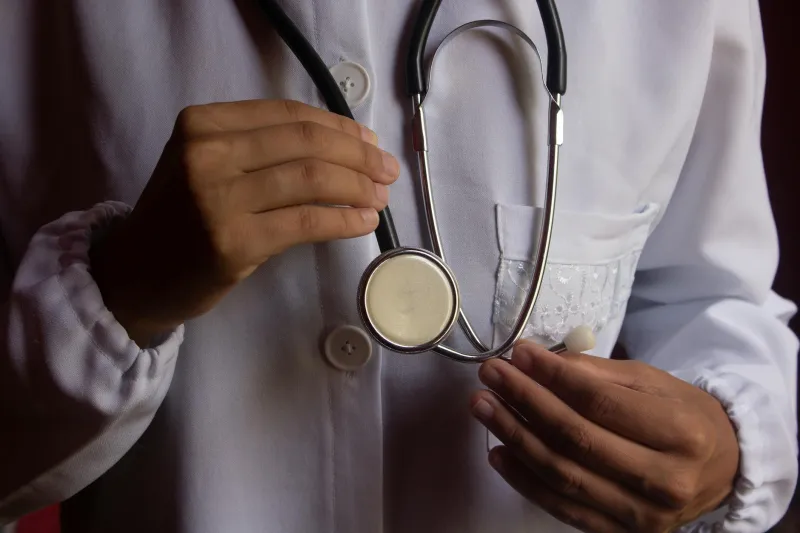
The Doctor Who Knew Everyone's Story
Dr. Samuel Brennan kept his medical bag in the front seat of his 1967 Buick, ready for house calls that could come at any hour. For thirty-eight years, he served the same Pennsylvania town, delivering babies who would later bring their own children to his small practice on Main Street. He knew that the Kowalski family had a history of high blood pressure, that Mrs. Henderson's arthritis flared up before rainstorms, and that young Tommy Miller was afraid of needles but responded well to jokes about baseball.
This wasn't exceptional care—it was simply how American medicine worked for most of the 20th century.
The House Call Era
In 1950, family doctors made roughly 40% of their patient visits in homes. They carried leather bags filled with basic instruments, prescription pads, and an intimate knowledge of their community's medical needs. These physicians often served the same families across generations, creating medical relationships that spanned decades.
The typical family doctor in 1960 managed about 1,500 patients—a number small enough to remember faces, family histories, and personal circumstances. Appointments weren't rushed affairs squeezed between insurance requirements and electronic health records. A routine visit might last 30 to 45 minutes, with time for conversation that revealed as much about a patient's health as any blood test.
Dr. Margaret Chen, who practiced in rural Iowa from 1955 to 1985, recalls knowing not just her patients' medical histories, but their work schedules, family dynamics, and financial situations. "I knew that Jim Peterson couldn't afford his blood pressure medication, so we'd work out a payment plan. I knew that Sarah Williams was caring for her elderly mother and her stress was affecting her sleep. You can't treat people effectively if you don't know their lives."
The Transformation Begins
The shift started in the 1970s with well-intentioned reforms. Medicare and Medicaid expanded access to healthcare, but introduced complex billing requirements. Medical schools began emphasizing specialization over general practice. Hospitals grew larger and more corporate, gradually absorbing independent practices.
By the 1980s, health maintenance organizations (HMOs) promised to control costs through efficiency. The fee-for-service model gave way to capitated payments, where doctors received fixed amounts per patient regardless of time spent. The financial incentives fundamentally changed: seeing more patients in less time became the path to profitability.
House calls, once a cornerstone of American medicine, virtually disappeared. In 1980, they represented less than 1% of physician encounters. The doctor's bag became a museum piece, replaced by appointment schedulers and billing software.
Today's Medical Assembly Line
Walk into a modern primary care office, and you'll encounter a system optimized for throughput, not relationships. The average primary care appointment now lasts 11 minutes. Physicians often see 25 to 30 patients daily, leaving little time for the conversational medicine that once defined family practice.
Dr. Jennifer Martinez, who practices in suburban Denver, describes the modern reality: "I have eight minutes to address a patient's chief complaint, review their medications, check their vitals, and document everything for insurance purposes. There's barely time to make eye contact, let alone discuss how their job stress might be affecting their blood pressure."
The electronic health record, while improving data accuracy and coordination, has created an unexpected barrier between doctors and patients. Physicians now spend more time typing notes than making eye contact, leading to what some call "screen-mediated medicine."
Patient panels have exploded in size. The average primary care physician now manages 2,500 to 3,000 patients—double the caseload of their 1960s predecessors. Continuity of care has suffered as patients are often scheduled with whichever provider has availability, rather than their chosen physician.
The Corporate Takeover
Independent family practices have become an endangered species. In 1983, 76% of physicians owned their own practices. By 2020, that number had plummeted to 44%. Corporate health systems and private equity firms have consolidated medical practices, prioritizing standardization and cost-cutting over personalized care.
This consolidation has created what critics call "drive-through medicine"—brief encounters focused on specific symptoms rather than comprehensive care for whole persons. The neighborhood doctor who knew three generations of a family has been replaced by rotating physicians following corporate protocols.
What We've Lost
The old system wasn't perfect. Medical knowledge was more limited, diagnostic tools were primitive, and many conditions that are easily treatable today were death sentences. Emergency care was often inadequate, and house calls, while personal, couldn't provide the sophisticated interventions available in modern hospitals.
But something profound was lost in the transformation. The doctor-patient relationship, once built on trust developed over years, has become a series of brief transactions. Physicians report feeling like "data entry clerks," while patients feel like numbers in a system designed for efficiency rather than healing.
Research consistently shows that strong doctor-patient relationships improve health outcomes, medication compliance, and patient satisfaction. Yet our current system makes such relationships nearly impossible to develop or maintain.
The Human Cost of Efficiency
Modern medicine can perform miracles that would have seemed impossible in Dr. Brennan's era. We can transplant hearts, cure many cancers, and manage chronic diseases with precision that earlier generations couldn't imagine. But we've arguably lost something essential in the process—the sense that healthcare is fundamentally about human connection.
The question isn't whether we can return to the medicine of the 1950s—we can't and shouldn't. But as we've gained technological sophistication, we've sacrificed the personal touch that made patients feel known, understood, and cared for as complete human beings rather than collections of symptoms and billing codes.
In our rush toward efficient, data-driven healthcare, we might ask: have we forgotten that healing has always been as much about the relationship as the prescription?