When 24 Shots Had to Last the Entire Vacation: How Photography Went From Precious Art to Infinite Throwaway Content
The Weight of Twenty-Four Chances
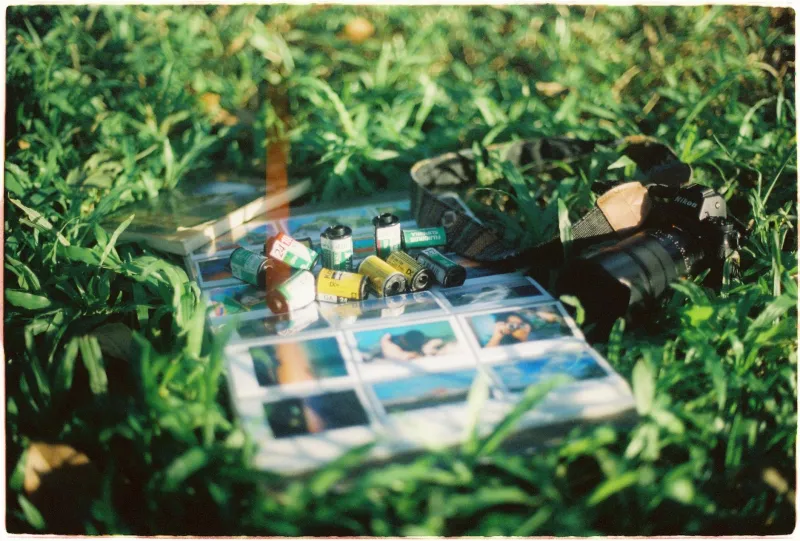
Packing for a family vacation in 1982 meant making hard choices about photography. Each roll of 35mm film gave you exactly 24 or 36 shots, and film wasn't cheap – especially when you factored in developing costs. A typical family might pack three rolls for a week-long trip, knowing that every single frame had to count.
You'd stand behind the camera, finger hovering over the shutter button, calculating whether this moment was worth one of your precious exposures. Was little Sarah's third attempt at building a sandcastle really different enough from the first two to justify another shot? Should you save frames for the planned visit to the lighthouse, or capture this unexpected sunset?
Every photo was a commitment. Once you pressed that shutter, the moment was captured on film that you couldn't see, couldn't delete, and couldn't retake. You lived with your choices until you got home and dropped the rolls off at the photo lab.
The Darkroom Democracy
Developing film was its own ritual that extended the photography experience for weeks after returning home. You'd drop off your precious rolls at the local photo shop, usually a small storefront operation where the owner knew your family and remembered your vacation plans.
Three to five days later – or a week if you chose the cheaper processing option – you'd return to collect your envelope of prints. The anticipation was genuine excitement. Which shots had worked? Had that sunset turned out as beautiful as you remembered? Did Uncle Bob's eyes come out closed again?
Opening that envelope was like Christmas morning. You'd flip through the prints right there at the counter, sometimes discovering magical accidents – double exposures that created artistic effects, or perfectly timed shots that captured expressions you didn't even realize you'd photographed.
When Photography Required Real Skill
Film photography demanded technical knowledge that most people today would find intimidating. You needed to understand how different lighting conditions affected exposure. You had to manually focus your lens and compose your shot without being able to immediately see the results.
Indoor photography required flash bulbs or flood lamps. Action shots meant understanding shutter speed and accepting that you might miss the moment entirely. Portrait photography required patience and multiple attempts, knowing that each failed shot cost money and couldn't be immediately retaken.
Camera settings weren't suggestions – they were requirements. Use the wrong film speed for your lighting conditions and every shot on the roll would be too dark or too bright. Forget to advance the film and you'd create double exposures. Run out of film at the crucial moment and the opportunity was simply lost.
The Scarcity That Made Memories Sacred
Because photographs were expensive and limited, families treated them as precious artifacts. Photo albums weren't just storage – they were family treasures, carefully arranged and frequently revisited. Each image represented a deliberate choice to preserve a specific moment.
Holiday gatherings included mandatory photo album reviews. Grandparents would pull out albums spanning decades, telling stories behind each carefully composed shot. Children learned family history through these curated collections of moments that someone had deemed worthy of preserving.
The physical nature of photographs made them feel permanent and important. You could hold them, pass them around, tape them to refrigerators, or slip them into wallets. Each print was a tangible connection to a specific moment in time.
Today's Infinite Image Universe
Pull out your smartphone right now and check your photo library. If you're like the average American, you have thousands of images stored on your device – probably more photos than your grandparents took in their entire lifetime. Yet how many of these images have you looked at more than once?
Modern smartphones eliminate every constraint that once made photography deliberate. Storage is essentially unlimited. Each shot costs nothing. You can take hundreds of photos in minutes, delete the ones you don't like, and immediately retake any shot that didn't work perfectly.
We now photograph meals, mundane moments, and countless selfies that previous generations would never have considered worth preserving. The average person takes over 1,000 photos annually, yet studies show most people rarely revisit their digital photo libraries.
The Paradox of Infinite Choice
Unlimited photography has created unexpected problems. When every moment can be captured, no moment feels special enough to deserve capturing. When every shot can be deleted and retaken, we lose the happy accidents and imperfect moments that often became the most treasured family photographs.
We now spend more time photographing experiences than experiencing them. Concert venues are seas of phone screens. Vacations become photo shoots. Children learn to pose before they learn to play naturally.
The ease of digital photography has made us lazier photographers. We take dozens of nearly identical shots instead of waiting for the perfect moment. We rely on quantity over quality, assuming that somewhere in our hundreds of vacation photos, a few good ones must exist.
The Lost Art of Photo Albums
When was the last time you printed photographs? For most Americans under 40, the answer is "never" or "not in years." Digital photos remain trapped in devices and cloud storage, never becoming physical objects that can be shared, displayed, or passed down.
Family photo albums have virtually disappeared. Instead of curated collections that tell family stories, we have chaotic digital libraries that no one organizes or revisits. Children grow up without the ritual of looking through family albums, missing the stories and context that once connected them to their family history.
The social aspect of photography has changed completely. Instead of gathering around photo albums, we scroll through social media feeds of carefully curated highlights from strangers' lives.
What We Gained and Lost
Digital photography has democratized the medium in ways that would have seemed impossible during the film era. Anyone can now take professional-quality photos with a device that fits in their pocket. We can capture moments that would have been technically impossible with film cameras.
We can instantly share images with family across the country, preserve memories in multiple formats, and create digital archives that will never fade or yellow with age. The technical barriers that once limited photography to serious hobbyists have completely disappeared.
But we've lost something profound in the process. The scarcity that made each photograph precious has been replaced by abundance that makes every photograph disposable. The deliberate choices that forced us to really see moments have been replaced by reflexive documentation that often prevents us from fully experiencing what we're photographing.
The Attention Economy of Images
Modern photography serves a different purpose than preservation – it feeds the social media attention economy. We take photos not primarily to remember moments for ourselves, but to share them for immediate validation from others.
The most photographed moments of modern life often aren't the most meaningful – they're the most "shareable." Perfectly plated restaurant meals get more camera attention than quiet family conversations. Scenic overlooks are documented from identical angles by millions of visitors, while intimate family moments go uncaptured.
Rediscovering Photographic Intention
Some photographers and families are deliberately returning to film or adopting film-like practices with digital cameras. They're limiting themselves to specific numbers of shots per event, printing and organizing physical albums, and focusing on capturing genuine moments rather than performative ones.
Instant cameras like Polaroids and Fujifilm Instax have seen surprising popularity among young people who've never experienced the constraints of film photography. The immediate physical print and inability to retake shots appeals to people overwhelmed by digital abundance.
The Memory Paradox
Perhaps most ironically, our ability to photograph everything has coincided with remembering less. When every moment can be captured, we pay less attention to actually experiencing and remembering moments naturally. Studies suggest that the act of photographing an event can actually reduce our memory of it – a phenomenon researchers call "photo-taking impairment effect."
Our grandparents, with their limited film and careful composition, often remembered their experiences more vividly than we do with our thousands of digital images. The constraint of film forced them to be present and intentional in ways that unlimited digital photography discourages.
From Curation to Chaos
The transformation from film to digital represents more than technological change – it reflects a fundamental shift in how we relate to memory, experience, and the act of preserving moments. We've moved from careful curation to chaotic accumulation, from precious artifacts to disposable content.
Those 24 shots that had to last an entire vacation forced families to think carefully about what moments mattered most. Today's unlimited photography removes that constraint but also eliminates the thoughtfulness that made each image special. We've gained the ability to capture everything while losing the wisdom to know what's worth capturing.
The grease-stained photo albums in our parents' closets tell more coherent family stories than the thousands of images scattered across our devices. Sometimes limitations create more value than unlimited possibilities.