The Beautiful Accident: How Americans Used to Discover the Things They Loved Most
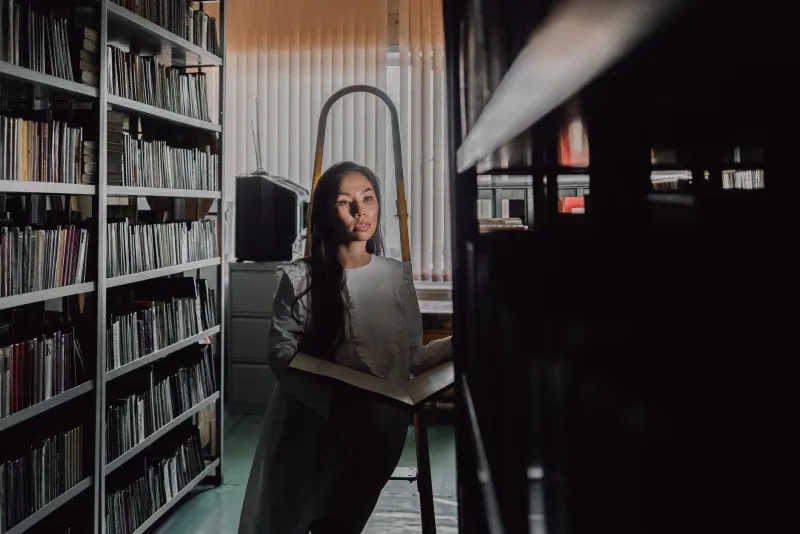
Ask someone about the book that changed their life, and there's a decent chance the story involves something accidental. A copy left on a bus. A recommendation from someone they'd just met at a party. A library shelf browsed out of boredom on a rainy afternoon, a spine that caught the eye for no particular reason, a first page that somehow became three hours of reading on the floor of the stacks.
Ask someone the same question today and the story is more likely to involve an algorithm. "It showed up in my recommendations." "I'd been watching similar stuff." "The app suggested it."
Both paths can lead to genuine love. But they're not the same experience. And something meaningful has shifted in how Americans encounter the things that matter most to them.
The Shelf You Didn't Know You Needed
The physical library — the actual building, with actual shelves organized by an actual system — was one of the great discovery machines in American cultural history. Not because librarians were curating personalized experiences, but because they weren't. The Dewey Decimal System didn't know or care what you'd liked before. It organized knowledge by subject, which meant that if you followed a curiosity — even a vague one — you ended up standing in front of a shelf that contained things you'd never thought to look for.
You went in for a book about the Civil War and came out with a biography of Frederick Douglass, a history of railroad expansion, and a novel set in Reconstruction-era Georgia — because they were all nearby, because you picked them up while looking for something else, because physical proximity created a kind of accidental conversation between subjects.
Video rental stores worked similarly. Blockbuster and its thousands of regional predecessors were, in practice, discovery engines disguised as commercial transactions. You went in for a specific movie and found it was rented out. So you browsed. You picked up boxes based on cover art, on taglines, on the handwritten staff recommendation cards that some stores posted on the shelves. You rented something you'd never heard of and it became, occasionally, a film you'd talk about for years.
There was no optimization happening. There was just a room full of things, and you in it, making choices based on instinct and availability and the vague pull of curiosity.
How Discovery Used to Travel Through People
Before platforms aggregated taste into data points, recommendations moved through human networks in ways that were slower, more personal, and often more transformative. A coworker who thrust a paperback into your hands on a Friday afternoon and said "you have to read this over the weekend" was doing something fundamentally different from an algorithm surfacing a title with a 94% match score.
The human recommendation carried social weight. It revealed something about the recommender — their taste, their values, what they thought of you. Accepting it was a small act of trust. Reading it was a shared experience that created a bond, a conversation, a point of connection that could last years. "Remember when you made me read that?" is a sentence that has started thousands of American friendships.
Radio operated the same way. You didn't choose what came next — the DJ did, or the station format did, or pure chance did. Which meant you heard things you'd never have selected. Some of it you hated. Some of it became the soundtrack of entire periods of your life, songs you associate with specific years and places and people, songs you'd never have found if you'd been in control of the queue.
Hobbies spread through proximity and accident too. A kid whose neighbor happened to be a model train enthusiast might spend an afternoon in that garage and emerge with a lifelong passion. A teenager who borrowed a guitar because a friend had one and it was there ended up in a band. The entry point was often arbitrary — but the arbitrariness was part of what made it feel like fate.
What the Algorithm Actually Does
It would be unfair to pretend that recommendation systems haven't created genuine value. They have. The ability to find, instantly, a deep catalog of books or films or music that aligns with established preferences is remarkable. People who might never have accessed niche interests — obscure film genres, specialized academic subjects, regional music traditions — now have pathways into those worlds that simply didn't exist before.
But the recommendation algorithm operates on a specific logic: it predicts what you'll like based on what you've already liked. It's a mirror, not a window. It shows you a refined, optimized version of your existing taste rather than something genuinely outside it.
This creates what researchers have called filter bubbles — not just in news and politics, but in culture more broadly. Your Spotify Discover Weekly is good, often excellent. But it's unlikely to hand you something that challenges the fundamental architecture of what you think you enjoy. It's unlikely to be the equivalent of the wrong turn down the library aisle that ended up changing how you think.
There's also something that happens to desire when it's anticipated. Part of what made the accidental discovery so powerful was that it arrived without expectation. You didn't know you were looking for it. You didn't know it existed. The experience of encountering it was therefore uncontaminated by anticipation, by the slight disappointment that comes when something has been so highly recommended that it can't possibly live up to the promise.
The algorithm, by surfacing things you're predicted to enjoy, subtly changes the experience of encountering them. You arrive with a prior relationship to the thing — a percentage match, a star rating, a category it's been placed in. The pure surprise is gone before you've even started.
The Accidental Self
Here's the deeper thing about serendipitous discovery: it didn't just expose Americans to new content. It shaped identity in ways that felt organic rather than curated.
Who you became — your tastes, your interests, your cultural reference points — was partly a product of what happened to be around you, what you stumbled into, what accidents of geography and friendship and boredom led you toward. That randomness created people with genuinely idiosyncratic combinations of interests. The person who loved jazz and Civil War history and Italian horror films and competitive fishing — that combination happened because of a series of accidents, not because an algorithm identified the cluster.
Today's discovery landscape tends to produce people who are very deeply into coherent taste profiles. The algorithm identifies your genre and goes deep within it. That can produce genuine expertise and passion. But it can also produce a narrowing — a person who knows everything about the things they already knew they liked, and relatively little about the vast territory of human creativity that doesn't match their established pattern.
Leaving Room for the Wrong Turn
The old ways of finding things weren't efficient. They wasted time. You read books you didn't enjoy, watched movies that didn't work, followed interests that went nowhere. But the inefficiency was generative. The wrong turn was sometimes the right one.
Some of the most interesting people you'll meet are still the ones who stumbled into something unexpected and followed it without knowing where it would lead. They didn't optimize their way there. They just kept their eyes open in the right kind of room.
Maybe the most valuable thing we could do, in an era of infinite personalized recommendation, is occasionally put the phone down and wander into a library without a specific title in mind. Let the shelf decide. See what's nearby. Give the beautiful accident a chance to happen.