Old Magazines, Paper Clipboards, and the Strange Calm of Waiting to See the Doctor
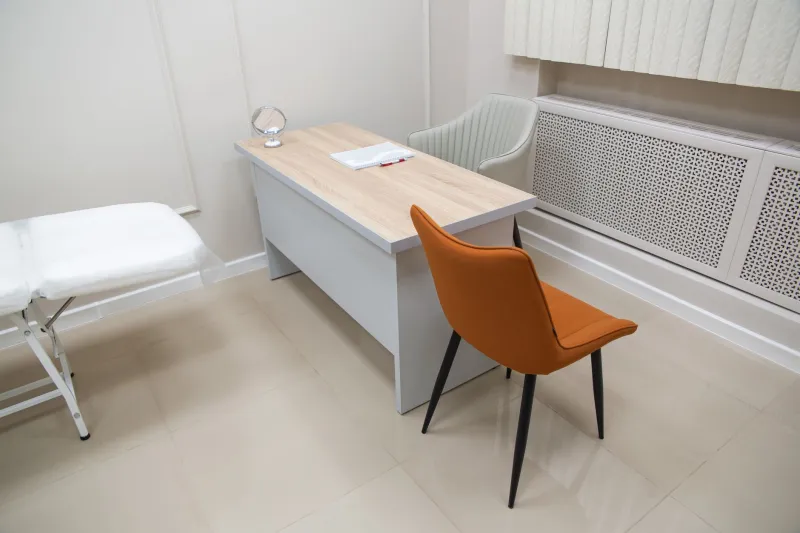
If you grew up in America before the smartphone era, you know exactly what a doctor's waiting room smelled like. That particular combination of antiseptic, carpet cleaner, and slightly stale air. You know what it felt like to flip through a copy of People magazine from four months ago, or to stare at a laminated poster about cholesterol that had clearly been on that wall since the Reagan administration.
You also know what it felt like to just... sit there. Waiting. With nothing to do.
It sounds like a small thing. But that experience — the friction of it, the enforced stillness — shaped how Americans interacted with healthcare in ways we didn't appreciate until it was gone.
The Clipboard Was the Beginning of the Conversation
Before you ever saw the doctor, you went through a ritual. The receptionist — an actual human being who often knew your name and your file — handed you a clipboard with several sheets of paper attached. You filled them out by hand. Medical history, current symptoms, insurance information, emergency contacts. It was tedious. It also forced you to think.
There's something about physically writing down your symptoms that's different from tapping through a pre-visit app questionnaire. You had to articulate things in your own words. You had to decide what was important enough to mention. That process of writing, slow as it was, often helped patients organize their thoughts before stepping into the exam room.
The nurse who called your name had usually glanced at that clipboard. She'd ask a follow-up question or two as she walked you back. That small exchange — brief, human, unhurried — was a micro-intake process that no digital kiosk has quite managed to replicate.
Nothing to Do Meant Actually Sitting With How You Felt
Here's the uncomfortable truth about the old waiting room: it gave you no escape from your own thoughts. You couldn't scroll. You couldn't text. You couldn't put in earbuds and disappear into a podcast. You sat in a plastic chair and you waited, and if you were there because something was wrong, you had no choice but to sit with that.
For a lot of people, that was the first time they'd actually slowed down enough to notice how bad they felt. The waiting room, for all its tedium, functioned as an involuntary check-in with yourself.
Today, most patients are on their phones from the moment they sit down to the moment their name is called. Some are working. Some are watching videos. Some are doing anything they can to avoid the anxiety of why they're there. The technology doesn't make the anxiety go away — it just keeps it at arm's length until the exam room door closes.
The Doctor Had Your Whole Story on Paper
In the old model, your medical history lived in a physical file folder — a manila jacket stuffed with handwritten notes, test results, and visit summaries going back years. The doctor who walked in carrying that folder often knew you. Not just your records. You. Your job, your family situation, whether you'd been stressed lately, whether you were the kind of person who underreported symptoms.
Family medicine used to be genuinely relational. The same doctor might see a patient for 20 years. The continuity wasn't just convenient — it was diagnostic. A physician who'd known you for a decade could spot a change in your demeanor or energy before you'd said a word.
Electronic health records were supposed to improve on all of this. And in some ways they have — legibility, accessibility across providers, and data integration are all real improvements. But there's a reason so many patients today feel like their doctor is spending more time looking at a screen than at them. The interface demands attention that used to go to the person in the room.
When Waiting Was Something Everyone Did Together
There was also a social dimension to the old waiting room that's easy to overlook. You sat with other people who were also waiting. Sometimes you made small talk. Sometimes you just shared the quiet. Either way, there was a low-level sense of shared experience — a reminder that health concerns were universal, that you weren't alone in the uncertainty.
Children were dragged along and learned, by osmosis, that going to the doctor was a normal part of life. It wasn't a crisis. It wasn't a digital emergency requiring an app and a telehealth appointment. It was a routine, and routines have a calming power all their own.
Today, telehealth has made medicine more accessible in genuinely important ways — especially in rural areas and for people with mobility challenges. That's real progress. But the trade-off is that medicine has become increasingly transactional. A symptom, a diagnosis, a prescription, a checkout. The waiting room, for all its frustration, was a buffer zone between ordinary life and medical care — a moment of transition that helped both patients and providers shift gears.
The Patience We Practiced Without Knowing It
We didn't love waiting. Nobody did. But we were good at it, because we had to be. We showed up, sat down, and accepted that some things couldn't be rushed. There's a version of that experience that was genuinely healthy — not medically, but psychologically.
The doctor's waiting room taught Americans, in small doses, that their time wasn't always the most important variable in the room. That being seen required waiting to be seen. That some processes had their own pace and you weren't in charge of it.
Now we expect to pre-check in from the parking lot, be called within minutes, and have results in an app before we get home. The efficiency is remarkable. But somewhere in all that speed, we lost the quiet — and maybe a little of the patience we didn't know we were building.