The Booth in the Back Where Everybody Knew Your Name — and Your Order
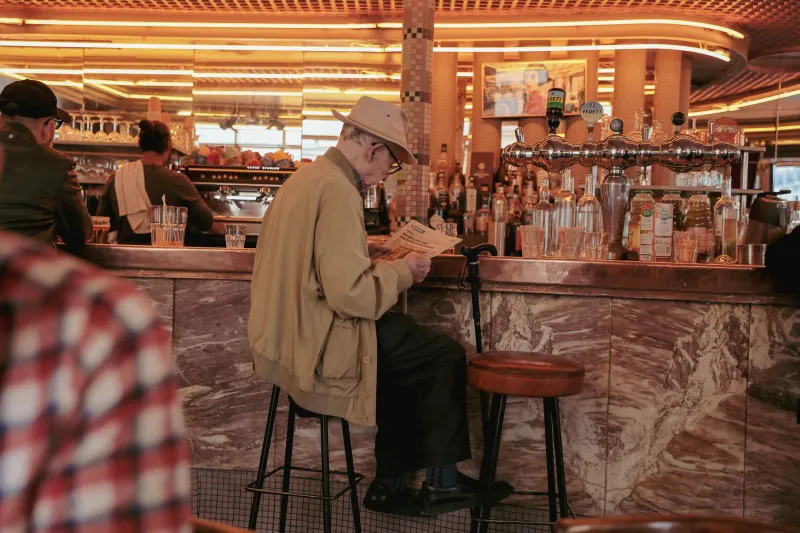
The Table That Was Always Yours
It wasn't always the best food in town. Sometimes it wasn't even close. But there was a diner, a corner Italian place, a Greek family restaurant, a breakfast counter — some version of it existed in nearly every American neighborhood — where you had a table. Not officially. Not reserved. Just understood.
You walked in on Saturday morning and the owner spotted you from across the room and started pouring the coffee before you'd even sat down. Your eggs came the way you liked them without you having to say it. If you brought someone new, they introduced themselves to the staff, not the other way around, because the staff already knew who you were.
That wasn't just good service. That was something else entirely.
What Made It Work
The neighborhood restaurant as a genuine institution required a specific set of conditions that are harder to maintain than they look.
First, ownership mattered. When the person who greeted you at the door was the same person who ordered the ingredients, trained the cook, and paid the lease, they had a different relationship to the place than any regional manager ever could. Their reputation was personally on the line every single day. That created accountability, but more than that, it created investment — in the food, in the space, and in the people who showed up regularly.
Second, regulars made the place. A neighborhood restaurant lived or died on its repeat customers, and that meant the staff had every reason to pay attention. Your preferences weren't data in a loyalty program. They were things someone actually remembered because you mattered to the business in a direct, visible way.
Third — and this is the part that gets underestimated — the restaurant was a place where different parts of a neighborhood's social life overlapped. The contractor sat next to the schoolteacher. The retired couple in the corner booth had been coming since before the young family by the window was born. The place held community in a way that was casual and unforced, which is the only way community actually works.
The Chain Arrived and Changed the Math
The expansion of chain dining through the 1980s and 1990s didn't kill the neighborhood restaurant overnight. But it changed the competitive landscape in ways that were hard to survive.
Chains brought consistency, marketing budgets, and price leverage that independent operators couldn't match. They also brought a fundamentally different philosophy: the goal wasn't to build relationships with specific customers in a specific place. The goal was to deliver a standardized experience efficiently, anywhere, every time.
That's not a criticism, exactly. There's genuine value in knowing that your meal will taste the same in Columbus as it does in Charlotte. But the optimization that produces consistency is the same optimization that makes genuine familiarity impossible. A chain server following a hospitality script isn't being fake — they're doing their job. But it's a different job than the one the diner owner was doing when she remembered that you took your coffee with one sugar and always asked about your mother.
Then the App Arrived and Changed Everything Else
Delivery platforms finished what chains started, in a different way.
DoorDash, Uber Eats, and Grubhub didn't just change how food arrived at your door. They changed the entire logic of the restaurant relationship. When a significant portion of your orders come through a third-party platform, you're not building a relationship with your customer — you're fulfilling an order for the platform's customer. The diner doesn't know who you are. You don't know who made your food. The transaction is complete and both parties move on.
For the restaurant, this often means paying 15 to 30 percent of the order to the platform for the privilege. For the customer, it means convenience and choice at a scale that's genuinely remarkable — hundreds of options, filtered by cuisine and rating and delivery time, available without leaving the couch.
What it doesn't mean is that anyone remembers you were there.
The Third Place Problem
Sociologist Ray Oldenburg coined the term "third place" decades ago to describe the spaces outside of home and work where community life actually happens — the barbershop, the pub, the park, the diner. His argument was that these places weren't luxuries. They were infrastructure. They were how people stayed connected to something larger than their immediate family and professional circle.
The neighborhood restaurant was one of the most reliable third places America had. It was accessible, affordable, and required nothing of you except showing up. You could be there alone and still be around people. You could be there with someone and have the conversation interrupted by the owner stopping by, which was an intrusion you always welcomed.
When those places thin out — replaced by chains that replicate the aesthetic without the relationship, or bypassed entirely by delivery apps that eliminate the visit altogether — the third place disappears. And the neighborhood becomes a collection of addresses rather than a community.
It's Not Gone, But It's Harder to Find
None of this is fully past tense. The neighborhood restaurant still exists. There are still owners who know your name and booths that feel like yours and cooks who remember that you don't like onions. You can still find them if you look.
But you have to look. And increasingly, you have to choose them deliberately over faster and cheaper alternatives. That's a different kind of relationship than the one that used to form naturally, just from proximity and habit and the simple fact that it was the place on your corner.
The food might still be the same. The booth might still be there. But the conditions that made it inevitable — that made it the place everyone ended up — those are harder to recreate once they're gone.