Fifty Dollars, Seven Days, and a Full Table: When the Grocery Store Was Still on Your Side
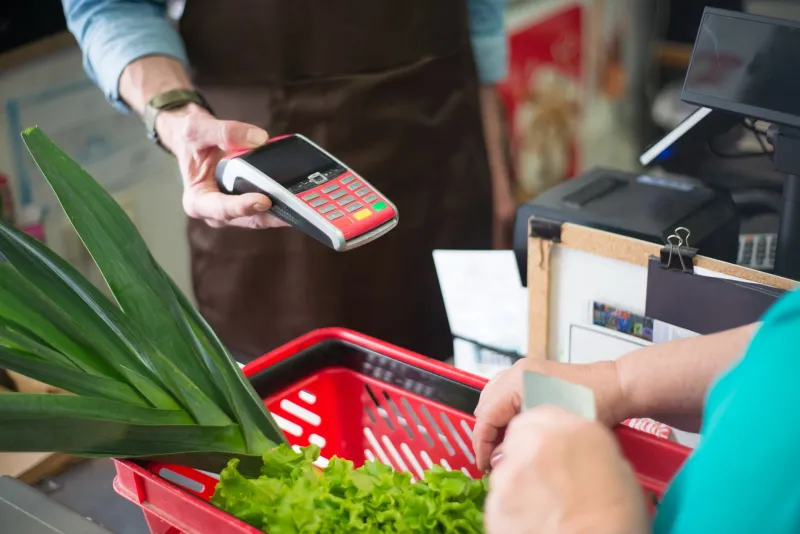
There's a specific kind of memory a lot of Americans carry around without fully realizing it. It's the image of a parent — usually a mom, often a dad — loading a cart at the supermarket with a calm, unhurried focus. No calculator app running in the background. No mental gymnastics about which brand was worth the price difference. Just a list, a cart, and a rough number in their head that almost always worked out.
That number, back in the mid-1980s, was often somewhere around fifty dollars. And it bought a week of food for a family.
If you've been to a grocery store lately, you already know that number doesn't mean the same thing anymore.
What Fifty Dollars Actually Got You
Let's be specific, because the specifics are what make this real.
In 1985, the average price of a gallon of whole milk was around $2.20. Ground beef ran about $1.50 a pound. A loaf of bread cost somewhere in the neighborhood of 55 cents. A dozen eggs? Under a dollar. Chicken thighs, dry pasta, canned tomatoes, potatoes, carrots, onions — all of it priced in a way that made feeding a household feel like a manageable task rather than a financial crisis.
For fifty dollars, a reasonably careful shopper could come home with protein for five or six dinners, enough produce to last most of the week, breakfast staples, lunch fixings, and probably a treat or two. A box of cereal. A gallon of ice cream. Maybe a frozen pizza for Friday night.
Today, that same fifty dollars buys roughly a third of that — if you're lucky and the store brand is in stock. A gallon of milk now averages over $4. Ground beef has climbed past $5 a pound in most markets. Eggs, which seemed like the last reliable cheap protein, made headlines in 2023 for cracking $5 and $6 a dozen in many parts of the country. Bread that costs under $3 is increasingly hard to find outside the bottom shelf.
The math has simply stopped working the way it used to.
It's Not Just Inflation — It's a Different Relationship
People often hear "inflation" and assume the explanation is straightforward: prices go up over time, that's normal, that's life. And yes, a dollar in 1985 isn't the same as a dollar today. Adjusted for general inflation, that $50 grocery run would be worth roughly $140 in 2024 money.
But here's the part that doesn't get talked about enough: wages haven't kept pace with food costs the way economic theory says they should. The median household income has grown since the 1980s, but the share of that income that a typical American family has to dedicate to groceries has shifted in ways that don't show up neatly in the official numbers.
In 1984, Americans spent about 11 percent of their disposable income on food. By recent estimates, that figure has crept back up after decades of decline — and for lower-income households, it never really came down at all. For a family earning $50,000 a year today, groceries can easily consume 15 to 18 percent of take-home pay once you account for the actual cost of feeding real people actual meals.
The grocery store, which once felt like a neutral space where budgeting was a mild inconvenience, has become a place where financial stress is baked into every aisle.
Meal Planning Used to Be Routine. Now It's a Skill.
Something else changed too, and it's subtler than the price tags.
In the 1980s and early 1990s, meal planning was just what families did. You made a list, you bought what was on the list, and you cooked what you bought. The decisions weren't complicated because the margins weren't razor-thin. If chicken was on sale, you grabbed a few extra pounds and froze them. If you needed pasta twice that week, pasta was cheap enough that it didn't matter.
Now, meal planning has become its own cottage industry. There are apps, YouTube channels, subreddits, and entire Instagram accounts dedicated to teaching people how to eat on a budget. "Budget meal prep" is a search term that gets millions of hits. People batch-cook on Sundays not for convenience but out of economic necessity — because buying the right ingredients in the right quantities and wasting nothing is the only way the numbers add up.
What was once an unremarkable household routine has become a survival strategy. That's a significant shift, and it happened gradually enough that most people didn't notice until they were already deep inside it.
The Store Itself Changed Too
It's worth noting that the grocery store experience has changed in ways beyond price. The 1980s supermarket was a fairly simple place — produce, meat, dairy, canned goods, a small frozen section. Store brands existed but weren't dominant. The choices were manageable.
Modern grocery stores are overwhelming by design. Thousands more SKUs. Entire aisles dedicated to snacks, beverages, and specialty items that didn't exist a generation ago. Premium sections. Organic tiers. Prepared foods sections that are essentially restaurants inside a store. All of it engineered to expand the average transaction size.
And it works. The average American grocery receipt is longer and more expensive than ever — not just because prices are higher, but because the store has gotten very good at converting a simple errand into a much bigger purchase.
What We Actually Lost
The fifty-dollar grocery run wasn't just about money. It represented something about the relationship between ordinary families and the basic act of feeding themselves. There was a kind of dignity in it — the sense that a regular paycheck, carefully managed, was enough to put real food on the table without anguish.
That feeling has eroded. Not disappeared entirely — people still manage, still cook, still gather around tables. But the ease is gone. The assumption that a modest income could reliably cover a week of decent meals without stress or sacrifice? That's the thing that quietly left, and a lot of Americans are only now putting words to the loss.
The receipt that used to fit in your pocket now needs its own bag.