The Three Stops That Fed America: What We Traded Away When the Supermarket Took Over
There was a rhythm to feeding a family in mid-century America that most people under 50 have never experienced. It wasn't one big weekly haul pushed through a checkout line. It was a series of short walks or quick drives to people who actually knew what they were selling — and knew you well enough to set something aside before you even asked.
The butcher. The baker. The corner grocer. Three stops, three specialists, one neighborhood that actually functioned like a community.
The Butcher Knew Your Family's Appetite
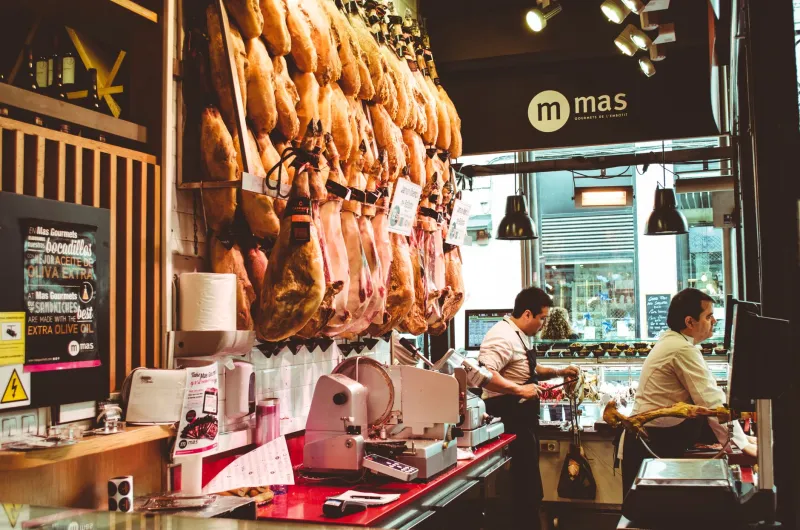
Walking into a neighborhood butcher shop was nothing like pulling a shrink-wrapped tray off a refrigerated shelf. The case was full of fresh cuts, and the man behind it — usually the owner — had been breaking down whole animals since before sunrise. He knew which families preferred leaner cuts, which ones had a big Sunday dinner every week, and which ones were stretching their budget after a slow month.
You didn't just buy meat. You got advice. He'd tell you how long to braise that shoulder, why the skirt steak was better than the sirloin this week, or that the pork chops just came in that morning. There was accountability built into every transaction. If the meat was bad, you knew exactly who to talk to — and he knew his livelihood depended on making it right.
Compare that to today's supermarket meat counter, where most of what's on display was processed and packaged at a facility hundreds of miles away, and the person restocking the shelves may not know a ribeye from a chuck roast. Convenience won. Expertise largely didn't make the trip.
The Baker Sold You Something That Wouldn't Last the Week
There's a reason bread from an old-school neighborhood bakery went stale within a day or two. It had no preservatives. It was made that morning. The baker wasn't trying to engineer a product with a three-week shelf life — he was trying to make something that tasted extraordinary right now.
Bakeries in American neighborhoods, particularly in immigrant communities, were cultural anchors as much as food businesses. Italian neighborhoods had their bread. Polish neighborhoods had their rye. Jewish neighborhoods had their rye and their challah and their babka. The baker wasn't just selling carbohydrates — he was maintaining a thread back to somewhere, back to someone.
Kids were sent down the block with a few coins and came back with something warm. That transaction built a kind of food literacy that's largely disappeared. You understood, by the age of eight, that bread was made by a person with flour and time — not manufactured somewhere unseen and delivered on a truck.
Today, the bread aisle in a typical American supermarket offers dozens of options, all of them engineered for softness, longevity, and visual uniformity. The artisan bread revival has brought some of that quality back in pockets, but it's a boutique experience now, not a neighborhood institution.
The Corner Grocer Had Opinions — and That Was a Feature
The neighborhood grocer occupied a different role than the butcher or baker. This was your catch-all — canned goods, produce, dairy, dry staples. But what made it different from a modern supermarket wasn't just scale. It was personality.
These store owners ordered based on what their customers actually wanted. If your neighborhood had a lot of families from a particular region, the shelves reflected that. The grocer knew which produce was fresh, which was about to turn, and which he'd quietly pull before it became a problem. He had skin in the game in a way that a regional chain's produce manager simply doesn't.
Credit was also a real feature of the corner store in ways that modern retail has entirely abandoned. Families who hit a rough patch could run a tab. The grocer kept a ledger. It was informal, trust-based, and deeply human. You paid when you could. That kind of arrangement sounds almost fictional now.
What the Supermarket Actually Gave Us
It would be dishonest to pretend the old system was perfect. Specialty shops weren't always affordable. They weren't always open when you needed them. And if you lived outside a dense urban neighborhood, access was inconsistent. The supermarket democratized food shopping in ways that genuinely mattered — more variety, lower prices, and the ability to get everything in a single trip.
For working families, especially as more women entered the workforce in the latter half of the 20th century, the one-stop model wasn't just convenient. It was necessary. Nobody had time to make three separate stops after a full workday.
But efficiency came at a cost that took decades to fully recognize. We lost expert guidance at the point of purchase. We lost the social fabric that daily neighborhood commerce quietly maintained. And we lost a kind of food knowledge that used to pass naturally between generations — through watching, asking, and being told by someone who genuinely cared.
The Distance Between You and Your Food
Most Americans today have no idea where their chicken came from, who processed it, or how old it was when it hit the shelf. That's not an accusation — it's just the reality of a food system built around scale and speed rather than transparency and relationship.
The neighborhood butcher, baker, and grocer weren't just convenient alternatives to the supermarket. They were a different philosophy of food entirely — one built on accountability, expertise, and the idea that feeding people well was a craft worth knowing by name.
We traded that for a cart, a loyalty card, and a self-checkout machine. In a lot of ways, it was a reasonable trade. But it's worth knowing exactly what we handed over to make it.