The Yellow Envelope at the Door: When the Worst News in the World Traveled Slowly
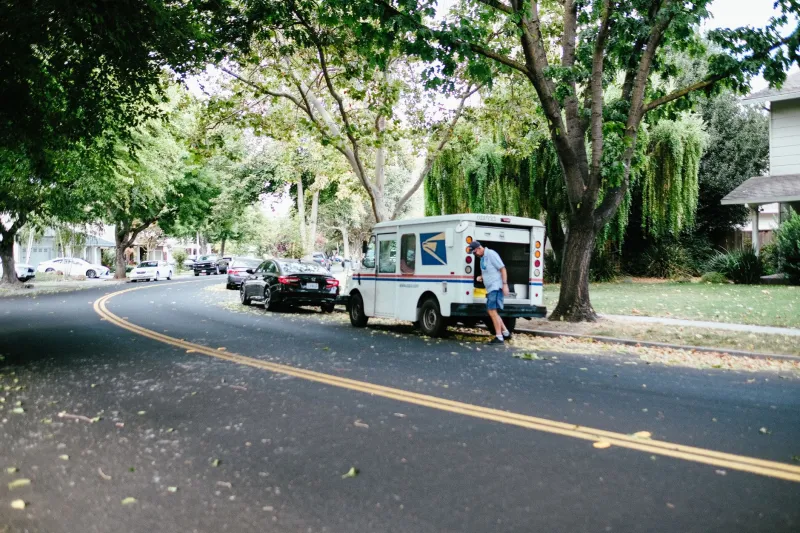
The Western Union boy rode a bicycle. That detail matters more than it might seem. He was often a teenager, maybe sixteen or seventeen, pedaling through a neighborhood he knew, toward a house where someone was about to have the worst day of their life. He didn't know that. He just had an envelope. But the neighbors, if they were watching, sometimes knew. A Western Union delivery during wartime meant one specific thing, and the sight of that bicycle turning up a particular driveway could stop an entire block cold.
That was how America received its worst news for most of a century. Slowly. Visibly. In a yellow envelope, from a boy on a bike.
The Architecture of Waiting
It's almost impossible to fully imagine from where we stand now, but for most of American history, there was a gap — sometimes hours, sometimes days, sometimes weeks — between when something terrible happened and when the people who needed to know found out. A soldier died in France. His mother in Ohio wouldn't learn about it for days. A business failed in New York. The partner in Chicago had no idea until a letter arrived.
That gap wasn't just an inconvenience. It was a psychological and social reality that shaped how people processed crisis. You lived inside uncertainty. You knew something might have happened. You didn't know what. You went about your life — cooking, working, talking to neighbors — while carrying that not-knowing like a stone in your chest.
And then the envelope arrived, or the letter, or the phone call on a shared party line. And the world changed. And you had to find a way to live in the new version of it.
What Slow News Did to Communities
Here's something that surprises people when they think about it: delayed bad news actually created stronger community response networks than anything we have today. When a telegram arrived at a house on a street, the neighborhood mobilized in ways that were physical, immediate, and sustained.
People showed up. They came to the door with food. They sat with the grieving family for hours, sometimes days. They didn't send a condolence text and move on with their afternoon. The slowness of news delivery meant that grief was a communal, visible, present-tense event. The whole block knew. The whole block responded.
Grief counselors and sociologists have noted for decades that modern bereavement tends to be more isolated than historical grief. Part of that is cultural, but part of it is structural. When tragedy arrives as a push notification, the people around you don't necessarily see it happen. You absorb the blow alone, in real time, staring at a small screen. The community response, if it comes at all, tends to be digital — a comment, a reaction, a string of broken-heart emojis.
It's not nothing. But it's not the same as someone sitting at your kitchen table at ten in the morning because they saw the Western Union boy and they weren't going to let you be alone.
The Particular Terror of Wartime Waiting
During World War II, families with men overseas lived in a specific kind of suspended dread that modern Americans haven't had to experience at scale. You knew your son or husband or brother was somewhere in the Pacific or in Europe. You got letters — censored, delayed, sometimes weeks old by the time they arrived. You read them and you knew they described a past that might already be over.
The telegram system existed specifically to deliver the news that letters couldn't. "The Secretary of War desires me to express his deep regret..." Those words, on that thin paper, were so feared that the sight of a Western Union messenger in a neighborhood with men overseas could cause physical reactions in people who weren't even the recipient. You watched from your window. You waited to see which house he stopped at. You felt relief and guilt in the same breath when he passed your door.
That experience — mass, shared, communal dread — knit communities together in ways that are genuinely hard to replicate. The waiting was awful. The community it created was real.
The Thirty-Second Grief Cycle
Contrast all of that with now. A family member dies in a hospital across the country. You get a phone call before you've left the parking lot. You post something on Facebook. Within minutes, hundreds of people have seen it. Condolences pour in from people you haven't spoken to in years, from acquaintances, from strangers who follow you. The news has traveled to more people in thirty minutes than a 1944 telegram could have reached in a month.
And yet. The person sitting next to you on the subway doesn't know. Your neighbor doesn't know. The people physically closest to you are often the last to find out, because the news went digital first. The intimacy of crisis — the neighbor at the door, the block mobilizing, the communal kitchen filling with casseroles — has been replaced by a broadcast model that reaches everyone and touches almost no one.
We are more informed and less accompanied than we have ever been.
What We Gained, What We Gave Away
Nobody is arguing that families should wait weeks to learn that a loved one has died. The speed of modern communication has eliminated a specific category of suffering — the prolonged uncertainty, the not-knowing — that was genuinely brutal. Getting a phone call the same day is better than waiting for a telegram that might come in a week.
But something went with the slowness. The waiting built a kind of resilience that's hard to develop any other way. People learned to hold uncertainty without collapsing under it, because they had no choice. They learned to function in the gap between what they feared and what they knew. And when the news finally arrived — good or terrible — the community was already there, already assembled, already watching.
The yellow envelope moved slowly through the world. But it moved through a world that was ready to receive it together. That part, we lost when we got faster.