Thirty Seconds of Tape and a Machine the Size of a Toaster: When Missing a Call Meant Missing Everything
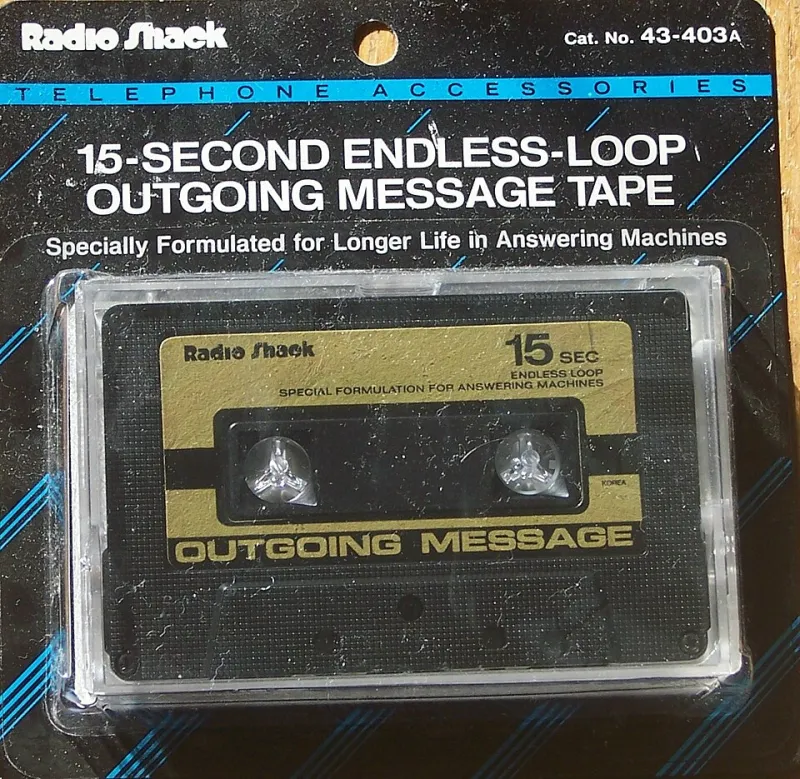
Photo: Wasted Time R, Public domain, via Wikimedia Commons
There's a good chance your parents or grandparents can still recite one from memory: the outgoing message. "Hi, you've reached the Johnsons. We can't come to the phone right now..." It was rehearsed. Sometimes rewritten. Occasionally performed with genuine dramatic flair, especially by teenagers who understood that this thirty-second recording was their family's public face to the entire world.
That little ritual existed because staying connected used to cost something. Not effort — money. Real, budget-line, sit-down-at-the-kitchen-table money. And understanding that changes how you see every text you'll send today.
The Machine That Guarded the Phone
Answering machines arrived in American homes in earnest during the 1980s, and they weren't cheap. Adjusted for inflation, a quality machine could run several hundred dollars — a serious purchase for something whose entire job was catching conversations you weren't there to have. Earlier models used two cassettes: one for the greeting, one for incoming messages. When the tape filled up, that was it. You physically rewound it, or the machine simply refused new callers.
People treated those messages like valuables because, in a sense, they were. A voice from a loved one who lived far away wasn't something you could scroll back through later. Erase it, and it was gone. Families kept tapes for years. Some people still have them in shoeboxes, unplayable because the machine that could read them died decades ago.
Long Distance Was a Luxury Good
The real cost, though, wasn't the hardware. It was the phone call itself.
For most of the twentieth century, calling someone in another state was priced like a small event. Rates dropped at night and on weekends, and Americans organized their lives around it — waiting until 9 p.m. or Sunday to call Aunt Carol two time zones away because it cost half as much. Parents famously barked "this is long distance!" the moment a call ran long, the equivalent of a parking meter running out.
A chatty monthly phone bill could rival a utility payment. College students called home collect. Military families planned calls like operations. And when someone did spend the money to reach you, you showed up for it. You sat down. You stayed. The call had a price tag, so it had weight.
What Unlimited Everything Erased
Now flip it. Today, the average American talk-text-data plan costs less, in real dollars, than a modest 1980s long-distance bill — and it covers essentially unlimited contact with anyone on the planet. The answering machine is a museum piece. The concept of "saving up" for a phone call is so foreign that explaining it to a teenager sounds like describing rationing.
Something was gained: grandparents video-chat with grandkids weekly, long-distance relationships survive on daily contact, and nobody schedules their week around a rate window.
Something was quietly lost, too. When communication is free and infinite, it stops being an occasion. A missed call used to mean something — a person made an effort, spent money, chose you. Now a voicemail sits unlistened-to for days because forty other notifications got there first. Scarcity created a kind of courtesy that abundance doesn't naturally reproduce.
The Message We Kept
There's a case to be made that the old system, for all its expense, made people better listeners. You got one shot at the call. You paid by the minute, so you got to the point, but you also lingered, because who knew when you'd afford the next one?
The $4,000 machine — that's what it costs when you adjust for inflation and add the decades of long-distance bills behind it — bought more than a cassette recorder. It bought the assurance that no voice went unheard. Today we never miss a call. We just don't always notice them anymore.
Progress usually works that way: it removes the cost and keeps the connection, then leaves us to figure out what the connection was really worth.