Cannonballs, Rope Swings, and Zero Supervision: When American Kids Owned the Water
The Summer That Belonged to Us
Every small town in America had one—that perfect swimming spot where generations of kids learned to dive, dared each other to jump from increasingly dangerous heights, and spent entire summer days with nothing but a packed lunch and strict instructions to "be home when the streetlights come on."
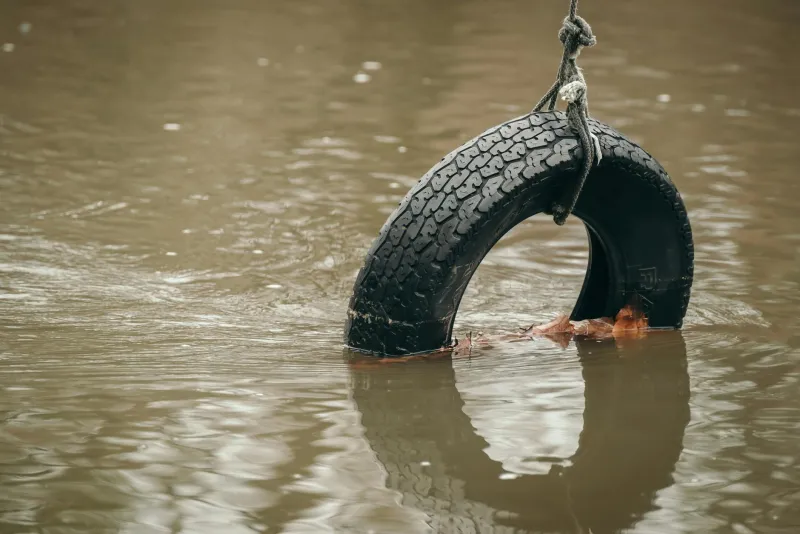
Maybe it was the old quarry outside town, its crystal-clear water hiding mysterious depths. Perhaps the bend in the river where someone's grandfather had tied a rope to the biggest oak tree. Or that secret pond behind the Johnson farm where the water was always just warm enough and just deep enough for the kind of summer memories that last forever.
 Photo: Johnson farm, via a.poki-cdn.com
These weren't official swimming areas. No lifeguards, no safety equipment, no posted rules about diving depth or maximum occupancy. Just water, kids, and the kind of freedom that would give today's parents heart attacks.
Building Our Own Adventure
The infrastructure was entirely DIY. Tommy's dad might help drag some old railroad ties down to the water's edge to build a makeshift dock. The older kids would scout trees for rope swing potential, testing branches with increasingly elaborate schemes that usually ended with someone getting dumped unceremoniously into the water.
Diving boards were whatever you could find and drag to the water. An old wooden plank balanced on some rocks. A fallen tree that jutted out over the deep end. The truly ambitious might convince someone's father to help construct an actual platform, though these engineering marvels were rare and treated with the reverence usually reserved for sacred spaces.
Every swimming hole had its hierarchy of courage. The baby jump from the low rock. The standard dive from the dock. The rope swing that required you to grab on at exactly the right moment or face a painful belly flop. And finally, the death-defying leap from whatever ridiculous height the teenagers had claimed as their domain.
The Education of Risk
Kids learned water safety the hard way—through experience, peer pressure, and the occasional scary moment that taught lessons no certification course could match. You learned to test the water depth before jumping somewhere new. You figured out how to read currents, identify dangerous areas, and respect the water's power.
The older kids taught the younger ones, passing down knowledge that had been accumulated over decades of trial and error. Don't jump there—too shallow. Watch out for that submerged log. The current gets tricky around that bend. This wasn't formal instruction; it was tribal knowledge, earned through scraped knees and close calls.
Most importantly, you learned your own limits. Without adult supervision constantly adjusting the rules for safety, kids had to develop genuine judgment about what they could and couldn't handle. The peer pressure was real, but so was the understanding that showing off could have serious consequences.
When Liability Was a Foreign Concept
Property owners who happened to have water on their land operated under different assumptions about responsibility. If kids wanted to swim in your pond, you might post a "No Swimming" sign to cover yourself legally, but enforcement was usually limited to chasing away the occasional troublemaker.
The idea that you could be sued because someone hurt themselves on your property while trespassing was largely theoretical. Communities operated on an understanding that kids would find water and kids would swim in it, and that was just part of growing up in America.
Parents sent their children off to these unsupervised swimming spots with the same casual confidence they'd show sending them to ride bikes around the neighborhood. The assumption wasn't that nothing bad could happen—it was that kids needed to learn how to navigate risk, and that the benefits of independence outweighed the dangers of overprotection.
The Rise of the Liability State
Sometime in the 1980s and 90s, everything changed. Lawsuits became more common and more expensive. Insurance companies started demanding higher premiums for any property with water access. Municipalities began posting "No Swimming" signs as a matter of course, not because the water was particularly dangerous, but because the legal exposure was too great to ignore.
The old swimming holes didn't disappear overnight. They were gradually fenced off, posted with increasingly stern warnings, or simply abandoned as property owners decided the risk wasn't worth it. What had been community assets for generations became legal liabilities.
Meanwhile, official swimming facilities ramped up their safety protocols. Public pools hired more lifeguards, implemented more rules, and required more certifications. Private swim clubs installed security cameras, demanded signed waivers, and established policies that would have seemed absurdly bureaucratic to previous generations.
The Supervised Splash
Today's kids experience water through a lens of constant adult oversight. Swimming lessons are mandatory and standardized. Pool parties require certified lifeguards, even for experienced swimmers. Beach trips involve detailed safety briefings and designated swimming areas marked with buoys and monitored by professionals.
The rope swings and diving platforms of yesteryear have been replaced by manufactured playground equipment designed by safety engineers and tested to meet specific liability standards. Water slides must be inspected annually. Diving boards require minimum depth measurements and posted warnings about proper use.
Even natural swimming areas that remain open to the public operate under strict guidelines. Designated swimming zones, mandatory life jackets for children, and posted rules about acceptable behavior. The kind of creative, unsupervised play that defined American summers for generations is now actively discouraged or outright prohibited.
What the Waivers Can't Capture
The modern approach to water safety is undeniably more effective at preventing drownings and injuries. Professional lifeguards, standardized safety equipment, and clear rules have made swimming statistically safer than ever before.
But something intangible was lost in the translation from community swimming holes to supervised facilities. The sense of ownership that kids felt over their special places. The confidence that came from learning to assess and manage risk independently. The deep summer friendships forged through shared adventures and the occasional shared terror of a jump that seemed like a good idea at the time.
Today's supervised swimming experiences are safer, but they're also more passive. Kids follow rules rather than making decisions. They rely on adult judgment rather than developing their own. They experience water as consumers of recreation rather than as explorers of possibility.
The Cost of Perfect Safety
The liability revolution that transformed American swimming culture reflects broader changes in how we think about childhood, risk, and community responsibility. We've created a world where kids are safer in the short term but arguably less prepared for the long-term challenge of navigating an unpredictable world.
The old swimming holes weren't perfect. Kids did get hurt sometimes. A few tragic accidents occurred that might have been prevented with better supervision or safety equipment. But they also produced generations of Americans who knew how to evaluate risk, who understood their own capabilities, and who had experienced the particular confidence that comes from mastering something genuinely challenging without adult intervention.
The Echo of Summer Freedom
Drive through small-town America today, and you'll still see them—those perfect swimming spots that once defined summer for entire communities. Most are posted with "No Trespassing" signs now, their rope swings cut down, their diving platforms removed. The water is still there, still inviting, but the freedom to simply jump in and figure it out as you go is largely gone.
What remains is the memory of a different kind of summer, when kids disappeared after breakfast and returned home exhausted and sun-drunk, their hair still damp from adventures that no adult had planned, supervised, or approved. When learning to swim meant more than just staying afloat—it meant learning to be brave, to be smart, and to be free in ways that no amount of professional instruction could teach.
The rope swings are gone, but the need for that kind of unstructured courage remains. We just haven't figured out where kids are supposed to develop it now.