Your Car Used to Speak a Language Anyone Could Learn. Now It Only Talks to Machines.
Pull into almost any dealership service bay today and you'll see it almost immediately — a technician rolling over a laptop on a cart, plugging a cable into a port beneath your dashboard before they've so much as popped the hood. The diagnosis doesn't come from listening. It comes from a screen. A code number appears, a repair order gets printed, and somewhere between $200 and $2,000 gets charged to your credit card.
It wasn't always like this. Not even close.
The Guy Three Houses Down Could Fix Anything
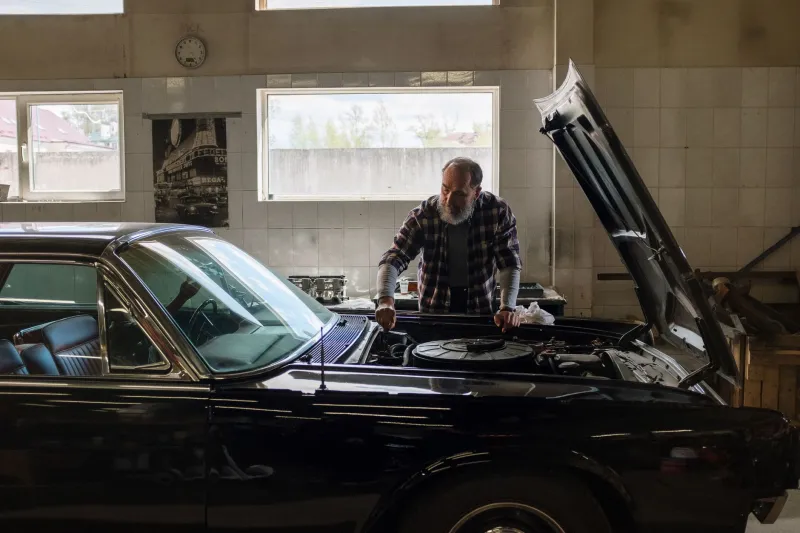
In the 1960s and into the 1970s, the American automobile was essentially a mechanical puzzle that any reasonably curious person could learn to solve. Engines were big, accessible, and built with a kind of honest simplicity that rewarded patience and observation. A rough idle meant something specific. A particular knock at certain RPMs pointed to a particular problem. Mechanics — both professional and backyard — developed a sensory vocabulary for diagnosing cars that was genuinely impressive.
Your neighborhood had one. Maybe he was a guy named Gary who worked at the plant during the week and spent Saturdays under the hood of whatever needed fixing on the block. He could tell a bad valve from a failing water pump by sound alone. He kept a coffee can of bolts on a shelf, a Chilton manual dog-eared to the relevant pages, and he charged you in beer and gratitude.
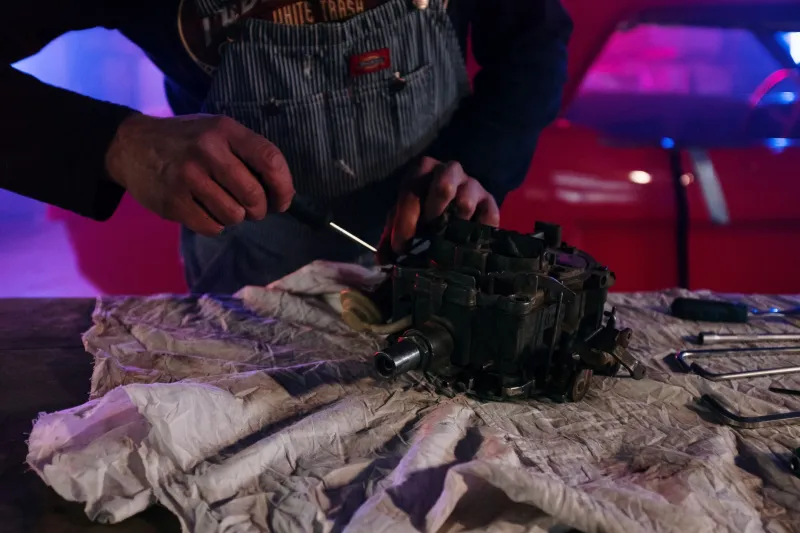
This wasn't just a quirky subculture. It was how a huge portion of American car maintenance actually got done. Shade-tree mechanics weren't a novelty — they were a genuine economic safety net for working-class families who couldn't afford dealership labor rates. A set of basic tools, a decent manual, and a free weekend afternoon could handle oil changes, brake jobs, carburetor rebuilds, and tune-ups without a single piece of electronic equipment.
When Cars Got Computers, Everything Changed
The shift didn't happen overnight, but it accelerated dramatically through the 1980s and 1990s as manufacturers introduced electronic fuel injection, onboard diagnostic systems, and increasingly complex engine management computers. By the time the OBD-II standard was federally mandated in 1996 — requiring all new cars to carry a standardized diagnostic port — the nature of car repair had fundamentally changed.
On paper, this was progress. And in many ways it was. Fuel injection made engines cleaner and more efficient. Computer-controlled systems improved reliability and performance in ways that purely mechanical engines couldn't match. Modern cars are genuinely safer and more fuel-efficient than anything rolling off a lot in 1968.
But something else happened alongside all that progress. The car stopped being something you could understand just by looking at it.
Modern engines are buried under plastic covers. Sensors monitor dozens of variables simultaneously. A single fault code can mean twenty different things depending on the vehicle. And manufacturers, particularly in the last decade, have increasingly built their vehicles around proprietary software that requires dealer-exclusive tools to access, reprogram, or even reset after basic repairs. Swap the battery in some newer models and you'll need a dealer to recalibrate the power steering. Replace a headlight assembly and the adaptive system may need to be re-aimed by a machine that costs more than most Americans' cars.
The Right to Repair Fight Nobody Talks About at Dinner
This isn't accidental. Automakers have spent years lobbying against so-called "right to repair" legislation that would require them to make diagnostic tools and repair data available to independent shops and consumers. The argument from manufacturers is about safety and software integrity. Critics argue it's about protecting a captive service revenue stream worth billions of dollars annually.
The result, either way, is that the American car owner has been quietly repositioned. You're no longer someone who owns a machine. You're a subscriber to a mobility service that happens to sit in your driveway. The moment something goes wrong, you're dependent on a chain of proprietary knowledge you have no legal or practical way to access yourself.
For independent mechanics — the ones who built careers on being able to fix anything with skill and ingenuity — the landscape has gotten brutal. Many shops have spent tens of thousands of dollars on scan tools just to stay competitive. Others have specialized or closed. The guy three houses down with the coffee can of bolts? He retired, and nobody took his place.
What We Actually Lost
There's a practical loss here that's easy to quantify. A 1972 Chevrolet pickup could be largely maintained by its owner at minimal cost. A 2024 truck with active safety systems, a digital instrument cluster, and over-the-air software updates cannot. The transfer of mechanical knowledge from one generation to the next — a ritual that happened in driveways and garages across the country for decades — has effectively been interrupted.
But there's a cultural loss that's harder to put a number on. Working on your own car was a form of self-reliance that felt distinctly American. It was problem-solving you could see and touch. It connected people — fathers and sons, neighbors, the guys from the shop who came over on a Sunday. It created a kind of competence that built confidence in ways that extended well beyond the driveway.
The $200 diagnostic machine isn't the villain in this story. Technology rarely is. But it's worth pausing to notice what quietly disappeared when the engine stopped being something you could read with your hands and started being something only a computer could translate. The democratization of the automobile — the idea that any American could own, maintain, and understand their own vehicle — was one of the great promises of the 20th century.
Somewhere between the carburetor and the CAN bus, that promise got quietly retired.