The Shelf That Made Your Family Feel Educated: When Knowledge Came in Twenty-Six Matching Volumes
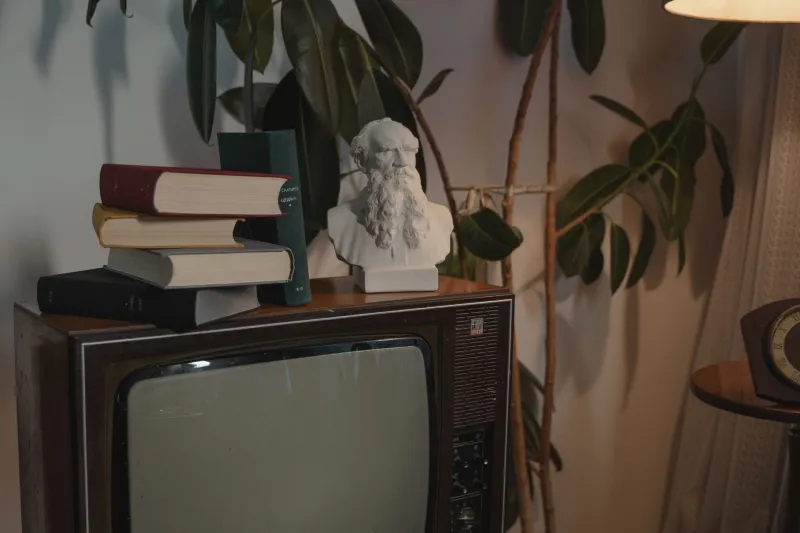
There are people alive today who can still tell you exactly where the encyclopedia set lived in their childhood home. Third shelf from the top, left side of the bookcase, next to the dictionary. Volume A always slightly more worn than the others because it was the starting point for every investigation. The spines color-coded and perfectly matched, each one a door into a specific slice of everything humanity had figured out so far.
World Book. Britannica. Collier's. Whatever your family had, it carried the same implicit message: we take knowledge seriously in this house.
 Photo: World Book, via img.freepik.com
That message — and the object that delivered it — is almost entirely gone now. And the way it disappeared tells you something interesting about what we gained, what we lost, and how Americans now relate to the very idea of a fact.
The Investment That Sat in Plain Sight
A complete set of encyclopedias wasn't cheap. In the 1970s and '80s, a full World Book set could run several hundred dollars — equivalent to well over a thousand dollars today. Many families bought them through installment plans, paying monthly for a physical library that would live in their home for decades.
That financial commitment was part of the point. The encyclopedias weren't hidden away in a study or locked in a cabinet. They were displayed — usually in the living room or family room, somewhere visible to guests. Owning a good set of encyclopedias was a statement about your household's values. It signaled that education mattered, that curiosity was welcome, that the act of looking something up was worth doing properly.
Salespersons who sold these sets understood the psychology perfectly. They didn't pitch encyclopedias as reference books. They pitched them as investments in your children's future — and for a lot of families, that framing landed, because it was more or less true.
The Accidental Education of Browsing
Here's what nobody talks about when they discuss encyclopedias: the way you actually used them was almost never efficient.
You looked up volcanoes for a school report and ended up reading about the Vietnam War because it was on the facing page. You went to find out how airplanes worked and got sidetracked by a full-color diagram of the human circulatory system that was somehow more interesting than whatever you'd come for. Volume M had a two-page spread on the moon landing that you must have read fifteen times over the course of your childhood — not because anyone assigned it, but because it was just there, waiting every time you opened to that section.
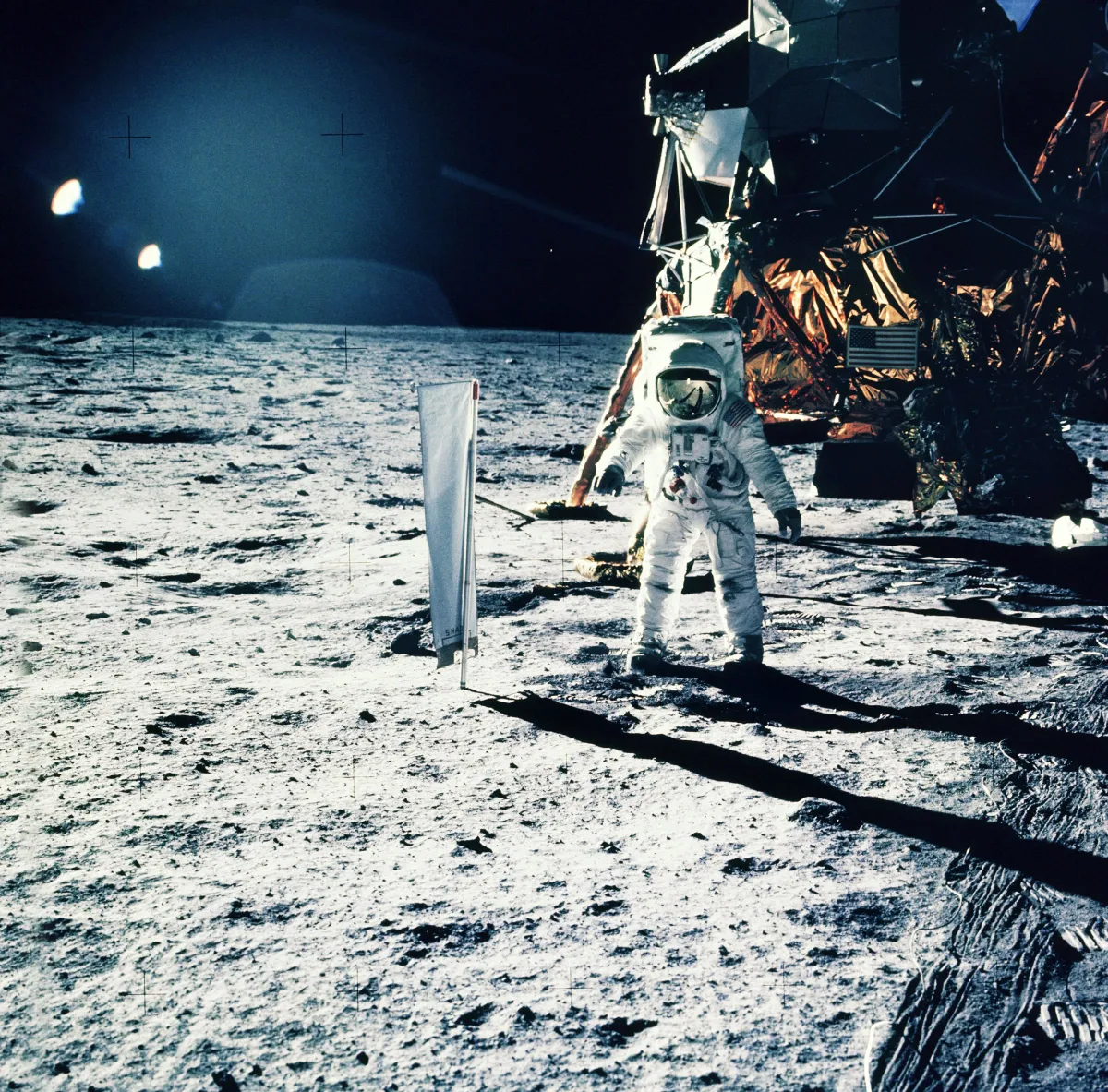 Photo: moon landing, via media.wired.com
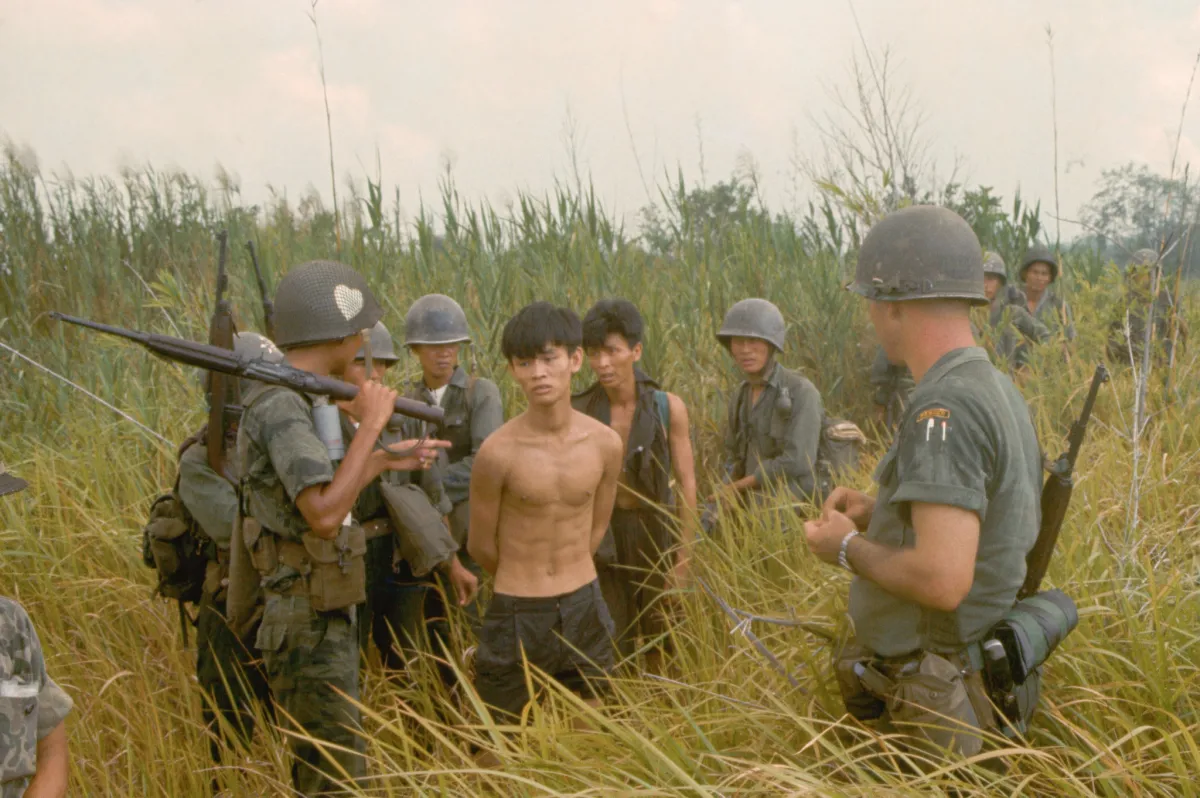 Photo: Vietnam War, via static01.nyt.com
This kind of serendipitous, unstructured learning was built into the physical format of the encyclopedia. You couldn't search for exactly what you wanted and get exactly that. You had to navigate — and navigation, by its nature, takes you past things you didn't plan to see.
Compare that to a Google search, which is extraordinarily good at giving you the specific thing you asked for and almost nothing else. The precision is genuinely useful. But the wandering — the productive intellectual wandering that turned a homework question into a two-hour journey through unrelated topics — largely disappeared when the format changed.
The Trust That Came With a Fixed Body of Knowledge
There's a dimension of the encyclopedia era that feels almost quaint now: the assumption that facts were settled.
The information in a World Book edition was curated, reviewed, and edited by teams of subject experts before a single volume went to print. Once it was published, it was authoritative in a specific and reassuring way. You might disagree with an interpretation, but you weren't going to find three competing versions of the same basic fact sitting side by side, each one sourced from a different anonymous contributor.
This created a particular relationship with knowledge — one built on a sense of boundary. The encyclopedia didn't contain everything. It contained what the experts had agreed was worth knowing, organized and explained for a general audience. That limitation was actually a feature. It made the body of knowledge feel navigable, coherent, and trustworthy in a way that the modern internet, for all its staggering breadth, fundamentally cannot replicate.
Today, a curious ten-year-old can access more raw information in thirty seconds than a 1975 encyclopedia set contained in its entirety. That is genuinely remarkable. It is also genuinely overwhelming — and the inability to reliably distinguish authoritative information from confident misinformation is one of the defining anxieties of contemporary American life in a way that simply didn't exist when your reference material came pre-vetted and bound in matching covers.
What the Annual Yearbook Update Meant
Most encyclopedia sets came with an annual yearbook supplement — a slim volume that updated readers on the year's major events and discoveries. Families who stayed subscribed would receive it in the mail, and it would join the set on the shelf, gradually filling in the gap between when the main volumes were printed and the present day.
This system acknowledged something honest about knowledge: it has an edge. It ends somewhere. The current year's yearbook brought you up to that edge, and beyond it lay the things that hadn't been written yet, the discoveries that hadn't been made, the events that hadn't happened. There was something clarifying about that boundary — a reminder that knowing things is a process, not a destination.
The internet abolished that boundary entirely. Which sounds like pure progress, and in many ways is. But it also eliminated the quiet comfort of a shelf that contained, right there in your own living room, a complete and trustworthy version of what the world currently knew.
That shelf is gone now. What replaced it is larger, faster, and infinitely less certain. Whether that trade was worth it probably depends on which day you're having — and whether you've already fallen down a Wikipedia rabbit hole that started with volcanoes and ended somewhere you never expected to be.