He Listened to Your Engine and Already Knew the Answer: What Happened to the Mechanic Who Fixed Everything Without a Computer
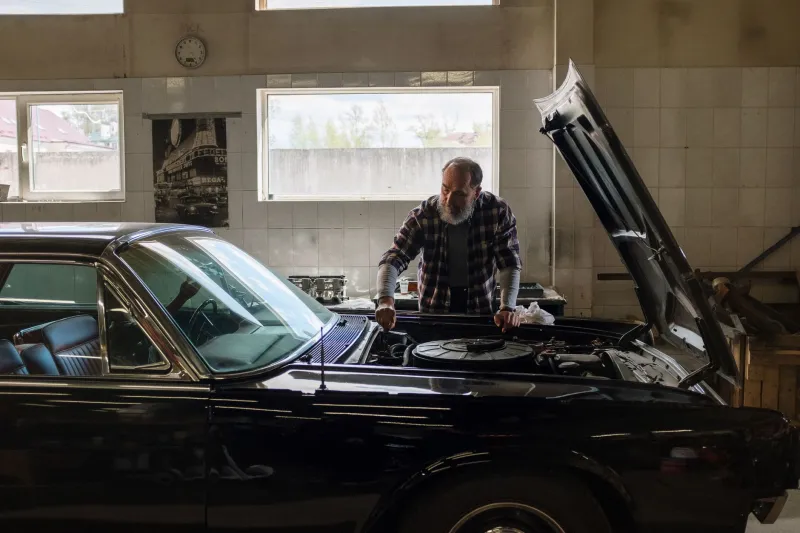
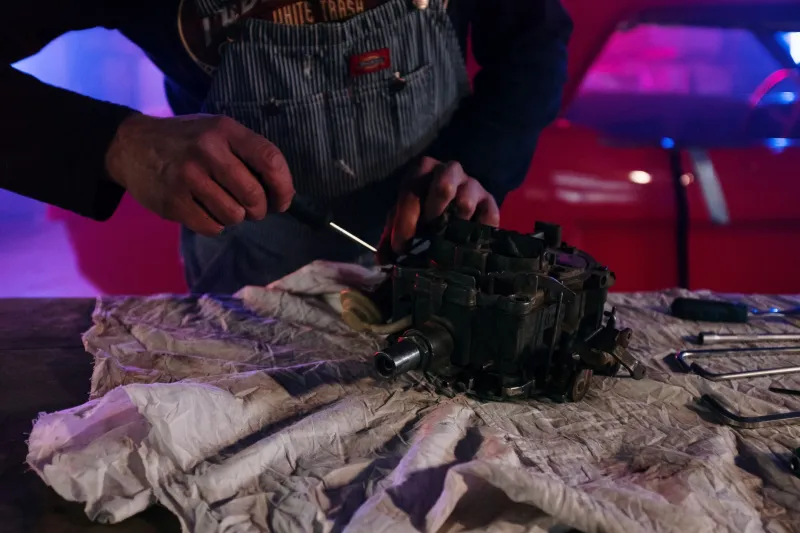
Pull into a shop in 1974 and the guy who walked out to greet you probably had grease under his fingernails, a rag hanging from his back pocket, and an opinion about your car before you even finished your sentence. You'd describe the noise — a knock, a rattle, something that happened only when you turned left — and he'd nod slowly, already forming a theory. He might pop the hood, listen for thirty seconds, and tell you what was wrong. Not because he guessed. Because he'd heard that exact sound a hundred times before.
That mechanic was a fixture. He knew your dad's old Chevy. He knew your wife's station wagon. He probably watched you learn to drive. And when the bill came, it was written on a carbon-copy invoice in handwriting you could barely read — but the number was something you could actually pay.
That world is mostly gone now. What replaced it is cleaner, quieter, and significantly more expensive.
The Car That Used to Make Sense
For most of the twentieth century, American cars were mechanical systems that skilled hands could understand directly. Engines had carburetors, distributors, and timing belts that responded to physical adjustment. Brakes were hydraulic systems with predictable wear patterns. Transmissions were heavy, durable, and repairable by someone who understood how gears worked.
A trained mechanic could troubleshoot most problems through observation, experience, and a set of basic tools. The job rewarded intuition. It rewarded pattern recognition built over years of working on similar engines. The knowledge lived in the person — in their hands, their ears, their memory of ten thousand repairs.
Neighborhood shops thrived in this environment. A single mechanic with a two-bay garage could handle most of what drove through the door. Overhead was low. Diagnostic equipment was a timing light and a vacuum gauge. Labor rates in the 1970s hovered around $15 to $20 an hour in most parts of the country. A tune-up cost somewhere between $30 and $50. Replacing a water pump might run you $80 all in.
These weren't charity prices. They reflected the actual cost of doing the work — and the work was genuinely accessible to someone with the right skills and a modest investment in tools.
When the Software Took Over
The shift didn't happen overnight. It started in the late 1970s and accelerated through the 1980s as federal emissions regulations pushed automakers toward electronic fuel injection and computerized engine management systems. By the time the OBD-II standard arrived in 1996 — requiring all new cars sold in the US to carry a standardized onboard diagnostic port — the game had fundamentally changed.
Modern vehicles aren't primarily mechanical systems anymore. They're rolling software platforms with mechanical components attached. A new car can contain upward of 100 million lines of code. Sensors monitor everything from throttle position to exhaust oxygen content to the angle of your steering wheel. When something goes wrong, the car logs a fault code. And reading that fault code requires equipment that costs thousands of dollars and software licenses that must be renewed annually.
This is where the neighborhood shop started losing ground. Independent mechanics couldn't always afford the proprietary diagnostic tools that manufacturers designed specifically to lock out non-dealer service. Automakers weren't always eager to share repair data. The knowledge that once lived in a person's hands migrated into systems that required expensive subscriptions to access.
The result? That $200 diagnostic fee you see posted on the wall at the dealership service center before anyone has so much as looked at your car.
The Human Cost of Complexity
The economics shifted in ways that hit ordinary car owners hard. Labor rates at dealership service centers now commonly run $150 to $200 per hour in major metro areas. Diagnostic scans are billed separately from the repair itself. Parts markups can be substantial. A repair that might have cost $300 at a neighborhood shop in 1995 can easily run $900 or more at a modern dealership — for the same underlying problem.
But the dollar figure isn't the whole story. What also disappeared was the relationship. The neighborhood mechanic knew your car's history because he'd been working on it for years. He'd remember that you'd already replaced the alternator eighteen months ago, so this new electrical issue probably wasn't coming from there. He'd give you a straight answer about whether a repair was worth doing on a high-mileage vehicle. He'd tell you when to walk away.
Dealership service advisors — often working on commission — operate inside a different set of incentives. They're reading from a screen, not from memory. The conversation is transactional in a way that the old neighborhood shop never was.
What Still Survives
It's worth saying that good independent mechanics still exist. In smaller towns and older suburbs, you can still find shops run by people who've been doing this work for thirty years and bring genuine expertise to every job. Some of them have invested in the diagnostic equipment and kept pace with the technology. They're not gone — they're just harder to find, and they're fighting uphill against a repair ecosystem increasingly designed to funnel cars back to the dealer.
There's also a growing community of shade-tree mechanics and hobbyists who use platforms like YouTube and online forums to tackle repairs themselves — a modern version of the self-reliance that once defined American car culture. It's not the same as having a trusted neighborhood shop, but it's something.
A Different Kind of Expertise
None of this means modern cars are worse. In almost every measurable way, they're better — more reliable, more efficient, safer, and capable of covering far more miles before anything goes wrong. The complexity that makes them expensive to repair is the same complexity that makes them last longer and perform better.
But something real was lost when the expertise moved out of the neighborhood and into the corporate service system. The mechanic who knew your engine by sound wasn't just a technician. He was a community resource. He was the person you called when you were three states from home and something started making a noise you didn't recognize.
That kind of knowledge — personal, accumulated, freely shared — doesn't show up in a diagnostic report. And it doesn't come with a $200 scan fee.