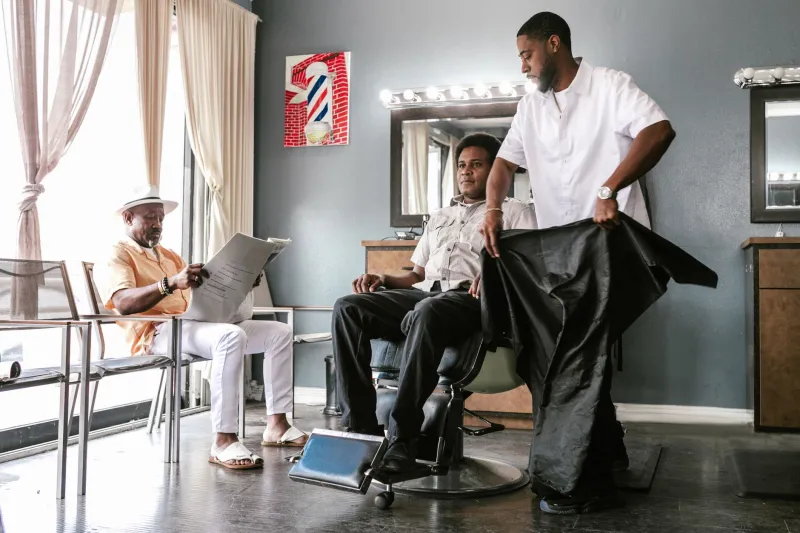
Circle It, Clip It, Call It: The Sunday Morning Ritual That Used to Launch Entire Lives

The Paper That Held Your Future
Sunday mornings used to have a specific weight to them. Not just the extra sleep or the bigger breakfast — but the thud of the newspaper hitting the porch. If you were in a certain kind of season in your life, you knew exactly which section you were reaching for before the coffee had even finished brewing.
The classifieds. Twelve, sometimes sixteen pages of dense, small-print listings that held, if you looked carefully enough, the next version of your life.
A better apartment. A used pickup truck with low miles. A job at a company you'd never heard of but somehow always wanted to work for. It was all in there, tucked between ads for garage sales and lost dogs, waiting for someone patient enough to find it.
What It Actually Took
Here's the thing people forget: working the classifieds was a skill. You didn't just flip through casually. You developed a system.
Some people used highlighters, color-coded by category. Others clipped listings with scissors and taped them into notebooks. You circled the ones worth a phone call, crossed out the ones that didn't pan out, and kept a running list of callbacks on a legal pad by the kitchen phone. There was strategy involved. Judgment. A kind of editorial eye that you trained over time.
The listings themselves were compressed almost to the point of code. "2BR, 1BA, util incl, no pets, refs req" told you almost nothing and yet somehow told you everything. You learned to read between the lines — "cozy" meant small, "motivated seller" meant there was a problem, "must see to appreciate" meant the photos would not have helped.
And because space in the paper cost money by the line, sellers and landlords had to make choices about what actually mattered. There was an honesty in that compression. Nobody buried the lead under a paragraph of marketing language.
The Phone Call Was the First Interview
Once you'd done your circling, you had to make the calls. And that was its own education.
You couldn't preview a landlord's communication style through a messaging app. You couldn't read reviews of a hiring manager before you called the number. You picked up the phone, dialed, and figured it out in real time. If the person who answered was rude or evasive, that told you something. If they were warm and answered your questions directly, that told you something else.
The classified call was a low-stakes audition — for both sides. Employers were listening to how you presented yourself. You were listening for red flags you couldn't have anticipated. It was a human exchange that no amount of profile-scrolling has fully replicated.
Missing a listing wasn't a tragedy, exactly, but it stung. If you slept in too late and someone else had already called on the apartment you'd circled, it was gone. No waitlist, no saved search, no notification when something similar became available. You had to show up again next Sunday and try again.
What the Algorithm Replaced
Today, the process looks almost nothing like that. Job boards like Indeed and LinkedIn surface listings based on your profile, your history, your location, and dozens of other signals you never consciously provided. Rental apps like Zillow and Apartments.com let you filter by pet policy, commute time, and whether the building has a rooftop deck. Facebook Marketplace and Craigslist (the last surviving heir to the classified tradition) show you cars within a hundred miles, sorted by price, with photo galleries.
The convenience is undeniable. You can do in twenty minutes what used to take an entire Sunday morning. You can apply for six jobs before lunch. You can tour an apartment virtually before deciding whether to call.
But something got optimized away in that process, and it's worth naming.
The classified section showed you everything, not just what an algorithm thought matched your profile. You might circle a job listing in a field you'd never considered and end up spending thirty years there. You might call about an apartment in a neighborhood you'd written off and discover it was exactly where you needed to be. Serendipity had room to operate because the search was genuinely open.
Today's platforms are built to narrow. They learn your preferences and reflect them back at you, which feels helpful right up until the moment you realize you've stopped seeing things that might surprise you.
The Ritual Was the Point
There's also something worth saying about the ritual itself — the Sunday morning, the coffee, the red pen, the physical act of making decisions on paper.
It forced a kind of intentionality. You weren't passively scrolling. You were actively hunting, making choices, committing your attention. The classified section demanded that you show up with a goal, even a loose one, and work toward it.
When you found something that looked right and circled it, there was a small but real sense of accomplishment. When you made the call and set up a showing, you'd done something. The friction in the process wasn't a flaw — it was a feature that made the eventual outcome feel earned.
Apartments found through apps are fine. Jobs discovered through LinkedIn are real. But there's a generation of Americans who found their first home, their best job, and occasionally their next chapter through a folded newspaper and a working pen — and they'll tell you it felt different. Not harder, exactly. Just more like something they'd actually done themselves.
Maybe what we traded away wasn't efficiency. Maybe it was authorship.