He Knew Your Name, Your Allergies, and Exactly What You Needed: The Slow Death of the Pharmacist Who Actually Practiced Medicine
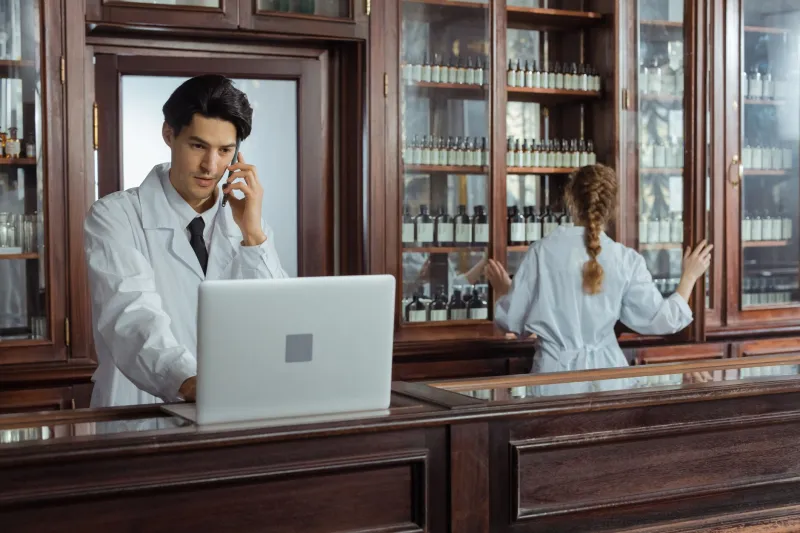
Walk into most chain pharmacies today and you'll find a well-lit, efficiently organized space where a technician scans a barcode, a machine counts pills into a bottle, and your name gets called over an intercom. The whole transaction takes about four minutes. You might never make eye contact with an actual pharmacist.
Now travel back fifty or sixty years, to a corner drugstore in almost any American town. Same profession. Completely different world.
The Chemist Behind the Counter
Mid-century pharmacists weren't just dispensing pre-manufactured tablets. They were compounders — skilled practitioners who regularly mixed medications from raw chemical ingredients, adjusting formulas based on a patient's specific needs. A child who couldn't swallow a standard pill might get a flavored liquid suspension, mixed that morning. A patient with an unusual sensitivity might receive a modified dosage that no pharmaceutical company had bothered to package commercially.
The mortar and pestle sitting on the counter wasn't decoration. It was a working tool, used daily.
These pharmacists trained for years in pharmaceutical chemistry. They understood drug interactions at a molecular level, not just from a warning label. And because they served the same community for decades, they often knew which medications a family had been taking longer than the family's own doctor did. Mrs. Henderson's penicillin allergy. Mr. Kowalski's heart condition. The Johnson kids' recurring ear infections every winter.
This wasn't data stored in a system. It lived in a human brain, connected to a human relationship.
The Neighborhood's First Line of Defense
For millions of working-class Americans, the pharmacist wasn't a supplement to medical care — they were primary medical care. Doctor visits cost money and required appointments. The drugstore was open, accessible, and free to walk into.
People came in with symptoms and left with actual guidance. Not a printout of possible side effects. Not a referral to a website. A conversation with someone who understood medicine, knew your history, and could look you in the eye and say, "That sounds like it might be something worth getting checked, but in the meantime, here's what I'd do."
The pharmacist occupied a unique social role — trusted expert and familiar neighbor at the same time. In small towns especially, they sat somewhere between a doctor and a friend. People trusted that combination in a way that's hard to replicate with a drive-through window and a receipt stapled to a paper bag.
When the Assembly Line Arrived
The transformation didn't happen overnight. It crept in across several decades, accelerated by pharmaceutical industry consolidation, the rise of chain drugstores, and a healthcare system increasingly organized around volume and throughput.
Pre-manufactured medications became the overwhelming norm. Why compound a custom preparation when a standardized pill was cheaper, faster, and already sitting on a shelf? Insurance reimbursement structures rewarded dispensing speed, not consultation time. The economics quietly reshaped what pharmacists were actually being paid to do.
Automated pill-counting machines arrived in the 1980s and 1990s. Centralized prescription processing followed. By the time mail-order pharmacy services became mainstream, the idea that your pharmacist might personally mix your medication had become almost quaint — the kind of thing your grandparents mentioned and nobody quite believed.
Today, many pharmacists spend the majority of their shifts managing a queue. Verification, labeling, counseling disclosures read from a script. The clinical knowledge is still there — these are rigorously trained professionals — but the system they operate inside doesn't leave much room for the kind of unhurried, personalized care that defined the profession's earlier identity.
What the Barcode Can't Capture
Compounding pharmacies still exist. They serve patients with specific needs — custom hormone therapies, pediatric formulations, medications for people with rare allergies. But they're a niche, not the norm. Most Americans will live their entire lives without ever encountering one.
The 90-day mail-order refill is the defining pharmacy experience of our era. Convenient? Absolutely. A box arrives. You didn't have to leave the house. The pills are correct, the dosage is accurate, and the whole thing was probably cheaper than picking it up in person.
But nobody on the other end of that transaction knows your name. Nobody noticed that you filled this prescription three weeks early, or thought to ask whether you'd been feeling okay lately, or remembered that your father had the same condition and responded badly to this particular drug class.
The information exists in databases, flagged by algorithms. But an algorithm catching a drug interaction warning isn't the same thing as a pharmacist who's known your family for fifteen years catching something that doesn't fit neatly into a system's logic.
A Craft That Quietly Became a Commodity
There's a version of progress here that's genuinely good. Standardized medications reduced dosing errors. Chain pharmacies made prescriptions accessible in communities that never had a local drugstore. Mail-order services serve elderly patients who can't easily travel. These aren't small things.
But something real was lost when pharmaceutical care became a logistics operation rather than a practiced craft. The relationship. The memory. The judgment built from years of knowing the same people through the same ailments and the same seasons.
The mortar and pestle is still the symbol of the pharmacy profession. You'll find it on signs, logos, and professional seals across the country. It's just that for most Americans today, it's purely symbolic — a nod to a version of care that the system decided it couldn't afford to keep.