Boarding in a Blazer, Landing in a Meal Coma: The Coast-to-Coast Flight That Cost a Month's Pay
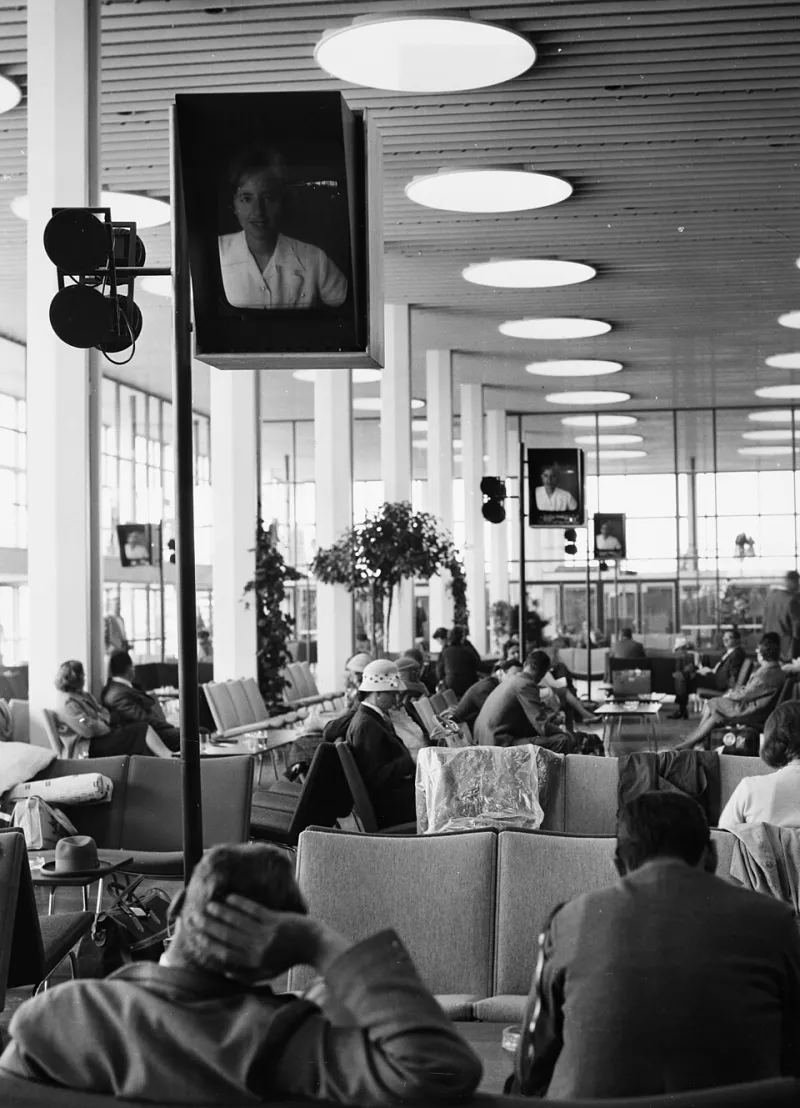
Photo: SAS Scandinavian Airlines, Public domain, via Wikimedia Commons
Picture a man in 1965 at Idlewild Airport — JFK, before it was JFK — heading to Los Angeles. He's wearing a suit because that's simply what you wore on an airplane, the way you wore shoes to church. His wife has gloves. His luggage is hard-sided and heavy. And in his breast pocket is a ticket that cost, in today's money, somewhere in the neighborhood of $3,000 to $4,500 for the round trip.
That's not a typo. In the mid-sixties, the federal government regulated airfares, competition was essentially banned, and airlines competed on service instead of price. The result: flying was a luxury event, and the experience matched the receipt.
The 1965 Passenger Experience, Door to Door
Getting to the plane was calm. You might arrive forty-five minutes early and feel rushed. Security, as we know it, didn't exist — you walked to your gate, maybe waved off by a stewardess who checked your ticket with a smile.
Then the flight itself. A nonstop transcontinental run took around five hours in a DC-8 or Boeing 720, but many flights took six or more with a stop. The seats were wide — roughly 34 to 36 inches of pitch, generously upholstered, often two across. Meals were served on real china with metal cutlery: steak or roast beef, a salad, dessert, cocktails if you wanted them. On some flights, a full dinner service in economy. Smoking was permitted in the back half, which today sounds like a small fire with wings.
Bags flew free. All of them. Nobody weighed your carry-on or charged you $40 because your suitcase crossed some invisible threshold.
The 2025 Version, Same Route
Today's traveler books a basic economy seat for — on a good day — $150 each way. Door to door, the modern experience looks like this: arrive three hours early, remove your shoes, surrender your water bottle, shuffle through a scanner. Then a five-and-a-half-hour flight in a seat with about 30 to 31 inches of pitch, a snack box you can buy for $12, and a carry-on you've engineered to fit within one inch of the sizer.
Checked bag? That's $35 to $50 each way, depending on the airline's mood.
Tallying the Score
Here's the surprising part. Price out the full 1965 journey — the inflation-adjusted ticket, the taxi to the airport, the dressed-up occasion — against today's budget trip with bag fees and airport food, and the old way still costs five to ten times more. The modern traveler gets across the country for what a 1965 passenger spent on dinner and tips.
But the losses are real. Legroom has shrunk by several inches. The meal became a purchase. The dignity of the occasion became a cattle call. And the flight time itself barely improved — five hours then, five and a half now. We didn't get faster; we got cheaper.
What We Actually Traded
The 1978 airline deregulation did what it promised: it made flying accessible to nearly everyone. The family that could never afford the $4,000 flight in 1965 can now visit grandma in Sacramento for the price of a used TV.
What got lost is the sense that the flight was part of the trip — an event you dressed for, ate well during, and remembered. Today the flight is the boring part between life and the destination, endured rather than enjoyed.
You can argue which era wins. But nobody in 1965 ever asked for a voucher because their chicken dinner ran out.