Saturday at the Mall: The Vanished American Gathering Place That No App Can Rebuild
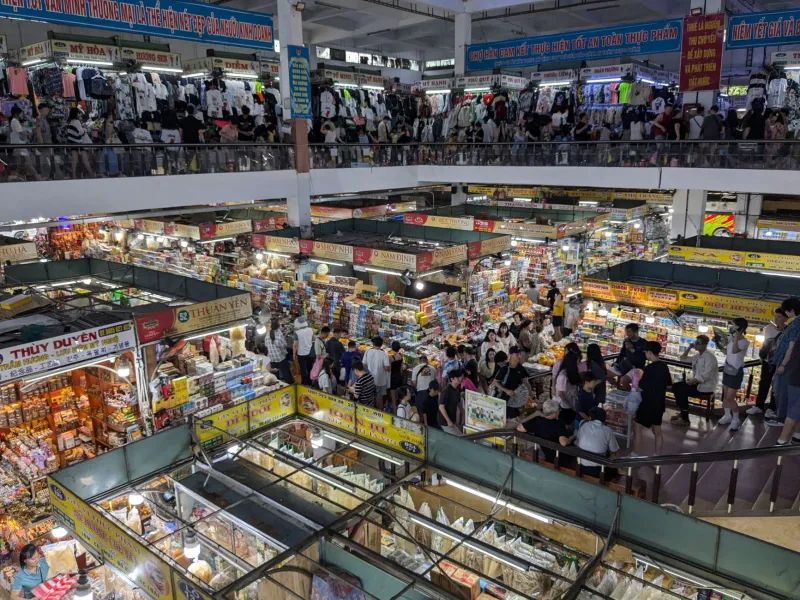
If you grew up in suburban America during the 1980s or '90s, you already know the feeling. The automatic doors sliding open. The warm blast of climate-controlled air carrying the specific scent of Cinnabon, soft pretzels, and department store perfume counters. The sound of a hundred overlapping conversations bouncing off polished tile floors under a skylight that made the whole place feel vaguely futuristic.
The mall wasn't just where you went to shop. It was where you went to be. And for a few decades, it held American suburban life together in ways we didn't fully appreciate until it was mostly gone.
More Than a Building Full of Stores
At its height — roughly 1985 to 2000 — the regional shopping mall functioned as the de facto community center for millions of American families. In an era before the internet collapsed physical distance, the mall was one of the few places where people from genuinely different backgrounds, ages, and income levels occupied the same space at the same time.
A Saturday afternoon at a major mall meant senior citizens doing their morning laps past shuttered storefronts before opening time. It meant toddlers losing their minds at the coin-operated horse ride near the entrance. It meant teenagers — the mall's most devoted inhabitants — circling the same route from anchor store to anchor store for hours, performing the elaborate social theater of adolescence in public. And it meant parents dragging kids through Sears while managing a stroller and a half-eaten pretzel.
None of these groups were there for each other. But they were all there — sharing a physical space, navigating around one another, existing in proximity in a way that quietly built a kind of social familiarity. You saw your neighbors. You ran into your kid's teacher. You spotted someone from church. The mall was, in its own commercial and slightly artificial way, a genuine community crossroads.
The First Job, the First Date, the First Everything
For American teenagers, the mall occupied a category entirely its own. It was neutral ground — not school, not home, not supervised in any meaningful way. It was the first place many kids got to practice being adults without direct parental oversight.
The food court was where you learned to budget. A $7 allowance could be stretched across an Orange Julius and a slice of Sbarro if you planned carefully. The arcade taught you something about competition and losing gracefully — or not. The first real job for a huge percentage of American teenagers happened inside a mall: folding jeans at the Gap, scooping ice cream at Baskin-Robbins, or working the register at Sam Goody while pretending to know everything about music.
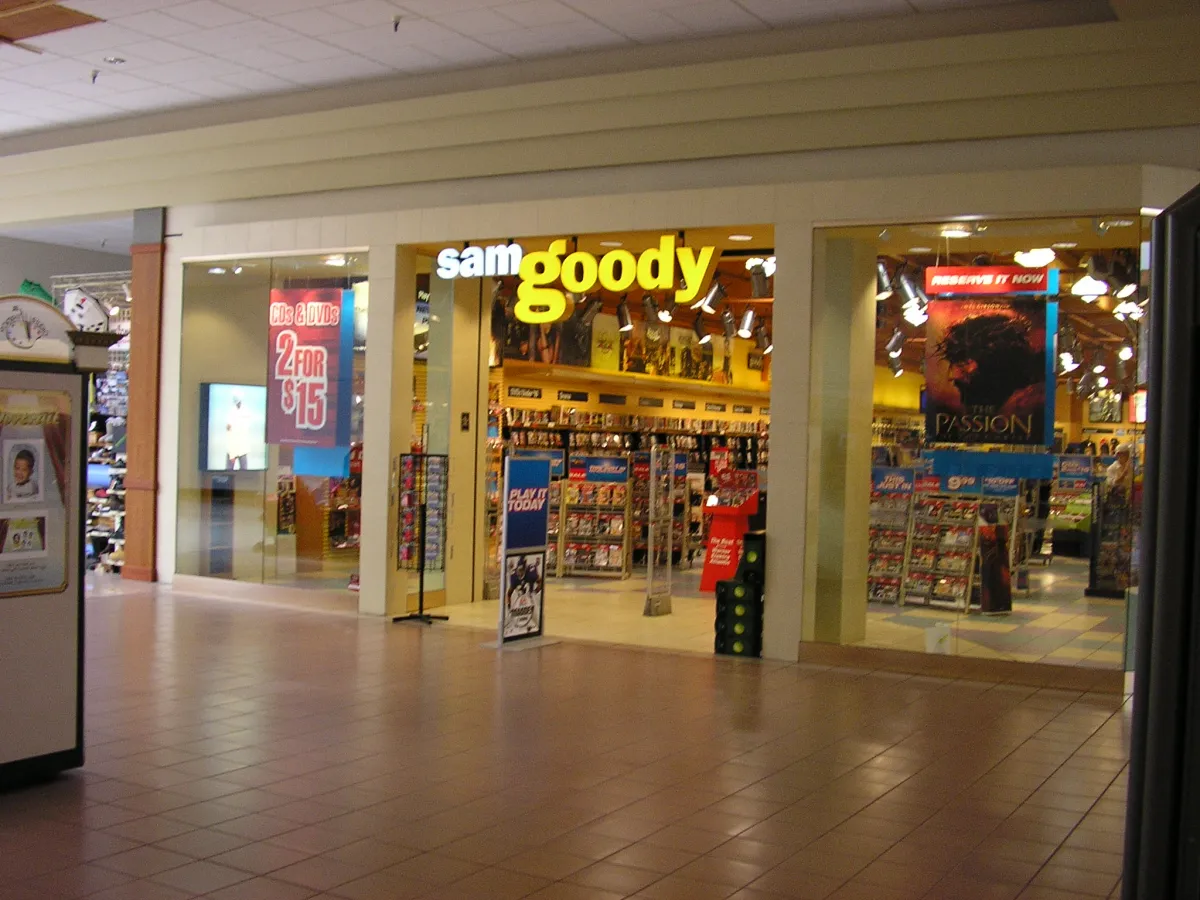 Photo: Sam Goody, via axs.tv
Those jobs were unglamorous and low-paying, but they were foundational. You learned to show up on time, deal with difficult customers, and function inside an institution that didn't particularly care about your feelings. That's not nothing. That's actually quite a lot.
First dates happened at the mall. Breakups happened at the mall. Entire friendships were built and dissolved over the course of summer afternoons spent wandering the same loop of stores for the fourth time in a day.
The Sensory Experience That Can't Be Shipped to Your Door
There's a dimension to the mall experience that the rise of e-commerce completely failed to account for in its early days: people didn't just go to the mall to acquire things. They went for the experience of being somewhere.
Browsing a record store was different from buying music online in a way that goes beyond mere nostalgia. You picked up albums you'd never heard of because the cover art caught your eye. A clerk who actually cared about music made an unsolicited recommendation that changed your taste permanently. You spent forty-five minutes in a bookstore not looking for anything in particular and left with three things you didn't know you wanted.
That kind of serendipitous discovery — the thing you find when you're not looking for it — is essentially impossible to replicate through an algorithm. Amazon's recommendation engine is impressive. It is not the same as wandering into a store with no agenda and coming out changed.
What the Empty Anchor Store Actually Represents
The decline of the American mall accelerated dramatically through the 2010s. By 2024, hundreds of once-thriving malls had either been demolished, converted into warehouses and distribution centers, or left as half-empty ghost structures with a single operating dollar store and a nail salon holding on by a thread.
The economic reasons are well-documented: e-commerce ate retail's lunch, anchor department stores collapsed under their own debt loads, and consumer habits shifted in ways that made the mall's physical model unsustainable.
But the cultural loss runs deeper than the retail numbers. What disappeared along with the mall was one of the last genuinely democratic physical spaces in suburban American life — a place where you didn't need money to enter, where no algorithm curated who you encountered, and where the randomness of human proximity could still produce unexpected moments of connection.
Your Saturday Amazon delivery is faster, cheaper, and more convenient than anything the mall ever offered. It will never, under any circumstances, be the place where you ran into your best friend by accident and ended up spending six hours doing nothing in particular — and somehow having one of the best days of the year.
That's not a small thing to lose. It's actually a pretty big one.