Sealed With a Stamp: The Era When a Letter to a Star Could Change Your Life

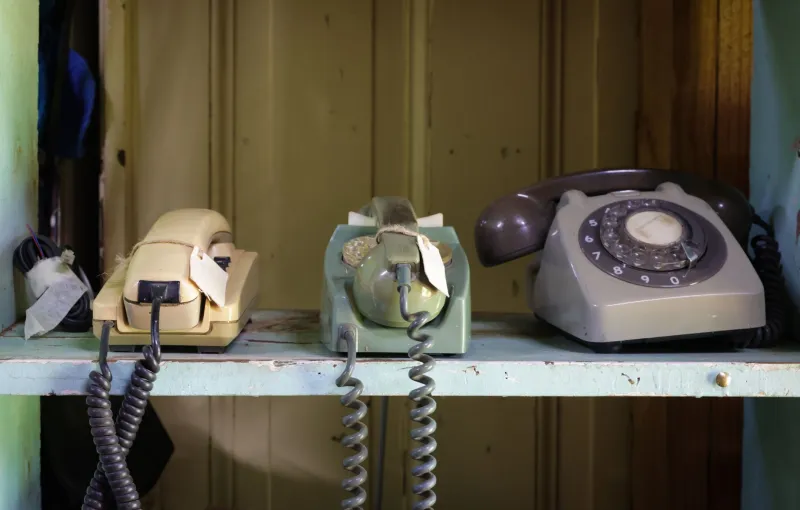
Photo by Photo by Ignat Kushnarev on Unsplash on Unsplash
There's a cardboard box somewhere in an attic in Ohio. Inside it, wrapped in a rubber band that's been there since 1978, is a signed photograph of Farrah Fawcett. On the back, in loopy cursive: Thanks for writing! Stay groovy. — Farrah. To whoever sent that letter, it wasn't just a piece of paper. It was proof that a real human being, one they'd only ever seen on a television screen, had held something they touched.
That's the thing about fan mail. It wasn't just correspondence. It was a transaction of humanity.
The Infrastructure of Adoration
From the 1940s through the early 1990s, fan mail was the primary pipeline between the famous and the people who loved them. Studios had entire departments dedicated to handling it. Television networks received truckloads of letters every week. A popular soap opera actor might get five hundred envelopes in a single Monday delivery. At peak moments — say, after a hit film or a memorable TV appearance — the numbers could swell into the thousands.
The process was surprisingly personal, at least at the smaller end of the fame spectrum. A regional country singer, a mid-level sitcom actor, or a beloved local sportscaster might personally read every letter they received. Some kept shoeboxes of them. Others wrote back by hand, one envelope at a time, at the kitchen table on Sunday mornings.
Bigger stars had assistants and fan clubs to help manage the volume, but even then, the expectation was that a reply would come. Studios trained their talent to understand that fans were the reason the lights stayed on. Responding to mail wasn't optional — it was professional courtesy. It was part of the job.
What a Stamped Envelope Required of You
Here's what people sometimes forget: writing a fan letter took effort. Real effort. You had to sit down, find paper, form actual sentences, explain who you were and why you cared. You had to commit to a point of view. Then you had to find a stamp, address the envelope, and physically walk it to a mailbox.
That friction wasn't a flaw in the system. It was the system. The letters that arrived on a celebrity's desk were filtered through genuine intent. Nobody dashed off a fan letter the way you might fire off a three-word comment at 2 a.m. The people who wrote meant it. And because they meant it, the responses meant something too.
A signed photo sent back to a twelve-year-old in Tulsa wasn't just merchandise. It was acknowledgment. It said: I know you exist. I see you. You matter to someone you'll probably never meet.
For a lot of kids growing up in small towns, that was an extraordinary thing.
The Parasocial Bargain We Made Instead
Today, a pop star can reach forty million followers in a single Instagram post. They can respond to comments in real time, go live from their living room, share their breakfast, and make fans feel like they're practically roommates. The access is staggering compared to anything that existed before the internet.
And yet.
For all that proximity, the individual fan has never been more invisible. A celebrity with three million Twitter followers who posts "Love you all!!" is speaking to everyone and no one simultaneously. The comment you leave is one of eleven thousand. The like you give registers as a number, not a name. The relationship is real in feeling but asymmetrical in a way that's almost architecturally designed to prevent genuine acknowledgment.
What we gained in scale, we surrendered in intimacy. The broadcast replaced the letter. Volume replaced depth.
When the Famous Wrote Back
The stories that survived from the fan mail era are remarkable precisely because they sound impossible now. Johnny Cash famously read and responded to letters from prisoners. Fred Rogers — who was, in many ways, the patron saint of direct fan engagement — personally replied to children who wrote to him for decades. There are documented cases of struggling fans who wrote to their favorite musicians in moments of crisis and received actual phone calls in return.
These weren't PR stunts. There were no cameras. Nobody posted it. The exchange happened in private, between two people, and it stayed there.
That's a version of celebrity culture we don't really have anymore — one where the famous occasionally chose to be simply human, in a way that left no digital footprint and required nothing from either party except time and sincerity.
What the Algorithm Can't Replicate
Modern fan culture has produced incredible things. Online communities have connected people across continents who share a love of the same obscure band or niche TV show. Fan creativity — the art, the writing, the analysis — has flourished in ways that would have been impossible without the internet.
But there's a particular kind of connection that lived inside that stamped envelope that hasn't been rebuilt. The feeling that you, specifically, were worth a moment of someone's time. That your words traveled across the country in a little paper container and landed somewhere real.
Somewhere in that Ohio attic, Farrah Fawcett's handwriting is still sitting in the dark, waiting to be rediscovered. That's not nostalgia talking. That's just a fact about what a letter could do that a like button can't.
Some things don't scale. And maybe that was the point.