From Sandlot Heroes to Credit Card Athletes: How Kids' Sports Became a $15 Billion Industry That Left Fun Behind
When the Only Equipment You Needed Was Imagination
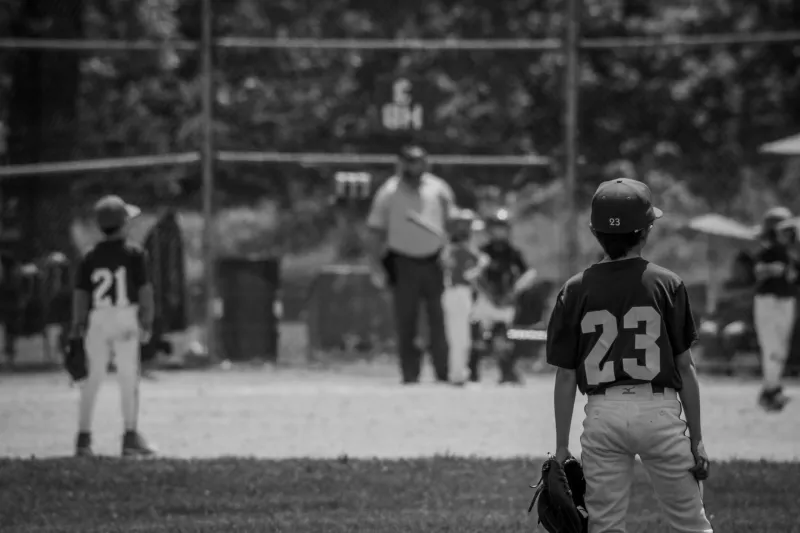
Picture this: It's 1975, and summer means one thing to kids across America—endless pickup games that start after breakfast and don't end until the streetlights come on. Baseball diamonds carved out of vacant lots, basketball hoops nailed to garage doors, and football games where the field boundaries were marked by parked cars and fire hydrants.
The "uniform" was whatever you had clean. The coach was usually whoever's dad wasn't working that day. And the only statistic anyone kept track of was how much fun you were having.
Fast-forward fifty years, and that world might as well be ancient history.
The Ten-Dollar Season That Built Character
Back when organized youth sports actually existed for kids instead of their parents' ambitions, a Little League season cost about what a family would spend on a tank of gas. Ten dollars covered your uniform—a jersey that would be passed down to three younger siblings and a cap that would survive until high school.
Practices happened at the local park, on fields maintained by volunteer dads with weekend lawn mowers. Games were scheduled around adult work schedules, not the other way around. And here's the kicker: parents actually trusted coaches to coach and kids to play, without hovering over every decision like helicopter air traffic controllers.
"I played three sports every year from age six through high school," recalls Janet Morrison, 52, from Columbus, Ohio. "My parents' total investment was maybe fifty bucks a year, and that included the cleats I'd wear until my toes were bleeding. Now my neighbor spends more than that on one weekend tournament for her ten-year-old."
 Photo: Columbus, Ohio, via image1.slideserve.com
When Everyone Made the Team Because Teams Were Just for Fun
Here's something that would shock today's youth sports parents: there used to be no such thing as "elite" eight-year-olds. Kids played on neighborhood teams with whoever showed up, regardless of skill level. The worst player might get stuck in right field, but they still got to bat and wear the uniform and feel like part of something.
Tryouts were for high school varsity teams, not second-graders. Travel teams didn't exist because the idea of driving three hours so your kid could play against other kids who were also seven years old seemed insane. Which, let's be honest, it kind of was.
The goal wasn't to create the next Derek Jeter. It was to tire kids out so they'd sleep through the night and maybe learn how to work with others without punching anyone.
 Photo: Derek Jeter, via caseandme.com
The Professionalization of Childhood
Somewhere along the way—probably around the time ESPN started televising Little League World Series games—American parents lost their minds about youth sports. What started as neighborhood fun morphed into a full-scale industry designed to convince parents that their child's athletic future (and by extension, their college scholarship hopes) depended on year-round training, private coaching, and tournament travel that would make a rock band jealous.
Today's youth sports landscape looks like something dreamed up by a particularly creative accountant. Club teams with $3,000 annual fees. Private trainers charging $100 an hour to teach proper batting stance to nine-year-olds. Tournament weekends that require hotel stays, rental cars, and meal budgets that rival actual family vacations.
The math is staggering: the average American family now spends over $600 per season per child on youth sports, with elite travel teams pushing that number into five-figure territory. We've created an athletic caste system where working-class kids are priced out before they hit puberty.
When Winning Became Everything
The most tragic part isn't the money—it's what we've done to the kids. The sandlot games that taught creativity, problem-solving, and genuine love of play have been replaced by highly structured practices that prioritize technique over joy. Kids who used to make up their own rules now follow rigid systems designed by adults who've forgotten that sports are supposed to be games.
Eight-year-olds get performance evaluations. Ten-year-olds specialize in single sports year-round because coaches convince parents that versatility is the enemy of excellence. Twelve-year-olds burn out and quit entirely, having never experienced the simple pleasure of playing for the sake of playing.
"My son's travel baseball coach told us that if he missed more than two practices, he'd lose his starting position," says Maria Gonzalez from Denver. "He was nine years old. I remember thinking, 'When did my third-grader get a job?'"
The Parents Who Forgot How to Be Spectators
Maybe the biggest change isn't in how kids play sports, but in how parents watch them. The bleachers used to be filled with adults who chatted with neighbors, read newspapers between innings, and occasionally looked up to cheer when something exciting happened.
Now those same bleachers are packed with parents filming every play on their phones, shouting strategic advice from the stands, and treating volunteer coaches like they're drawing NFL salaries. Youth sports have become a performance where the audience has forgotten they're supposed to enjoy the show.
The Scholarship Myth That Broke the Bank
Here's the dirty secret driving all this madness: athletic scholarships are about as common as unicorns. Less than 2% of high school athletes receive any college athletic scholarship money, and the average partial scholarship covers maybe 20% of college costs. Yet parents continue to spend tens of thousands of dollars chasing a dream that's statistically less likely than getting struck by lightning.
Meanwhile, the kids who would have benefited most from sports—those who needed structure, teamwork, and a positive outlet—are sitting on the sidelines because their families can't afford the entry fee to what used to be free.
What We Lost When We Professionalized Play
The saddest part of this transformation isn't just the money or the stress—it's the death of authentic childhood experiences. When kids organized their own games, they learned negotiation, creativity, and resilience. They figured out how to handle conflicts without adult intervention. They played because they wanted to, not because someone scheduled it.
Those pickup games produced more than just athletes—they produced problem-solvers, leaders, and kids who understood that failure wasn't the end of the world, just part of the game.
The True Cost of Optimization
We've optimized youth sports the same way we've optimized everything else in American life: by removing all the inefficiencies that actually made them valuable. The waiting around, the mixed skill levels, the imperfect fields, the volunteer coaches who cared more about character than championships—those weren't bugs in the system. They were features.
Now we have a generation of kids who are technically better athletes than ever before, but who've never experienced the pure joy of playing until dark just because the game was too good to stop. We've given them professional-level training and taken away the one thing that made sports magical in the first place: the freedom to just play.
The ten-dollar uniform bought more than fabric and team colors. It bought belonging, joy, and the radical idea that some things in life should be simple. Now that we've turned childhood athletics into a business, we shouldn't be surprised that we've lost the very thing we were trying to protect: the love of the game itself.