When the DJ Was Your Discovery Engine: How America Found New Music Before Algorithms Knew What We Wanted
The Democracy of the Dashboard
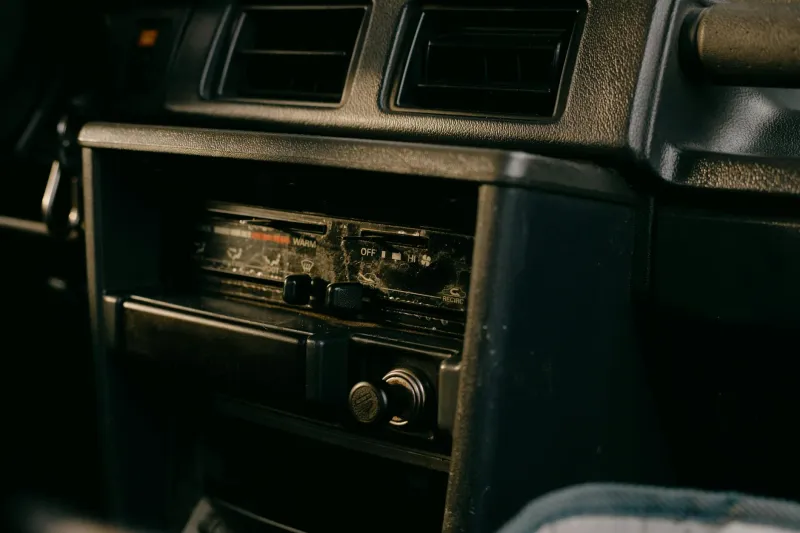
Every American family road trip began the same way: someone claimed the radio dial, and everyone else learned to live with their choices. No negotiations, no individual playlists, no earbuds for escape. The car radio was a musical dictatorship that somehow created more democratic musical experiences than anything we have today.
Dad might prefer the country station. Mom lobbied for the oldies. The teenagers campaigned for whatever Top 40 station had the strongest signal. But ultimately, the radio decided what everyone heard, and families learned to find common ground in the space between static and the next town's broadcast range.
This wasn't just background music—it was the soundtrack to American mobility, the shared experience that turned three hours of highway into a musical journey none of you had planned.
The Geography of Sound
American radio in the pre-satellite era was intensely local. Driving from Chicago to Denver meant experiencing a musical geography as distinct as the changing landscape outside your windows. Chicago's blues-heavy stations gave way to Missouri's country crossroads, which morphed into Colorado's folk-rock mountain sound.
Each region's radio reflected its culture, its demographics, its local music scene. Detroit stations played more Motown. Nashville favored country. San Francisco leaned into psychedelic rock. New Orleans brought you jazz and zydeco. The radio dial was a real-time cultural map of America.
 Photo: New Orleans, via babes34.com
Families planning long trips would research radio stations along their route, noting which cities had the best music and where they might lose their favorite genres entirely. The car radio wasn't just entertainment—it was your primary connection to the local culture of wherever you happened to be driving.
The Tyranny of the Tower
Your musical options were entirely dependent on physics and geography. Radio signals had range, and that range determined your choices. Drive through rural Wyoming, and you might have two stations: country and more country. Hit a major metropolitan area, and suddenly you had dozens of options competing for your attention.
This created a unique form of musical democracy. Unlike today's infinite choice paralysis, families had to work within the constraints of what was actually available. You couldn't skip songs you didn't like—you either changed stations, turned off the radio, or learned to appreciate something new.
The strongest signal often won, regardless of musical preference. If the classic rock station came in crystal clear while the Top 40 station faded in and out, classic rock it was. Families developed shared musical vocabularies not through choice, but through circumstance.
The Disc Jockey as Cultural Curator
Radio DJs were America's first music recommendation algorithms, but they operated on intuition, local knowledge, and genuine passion rather than data points and listening patterns. A good DJ could read a room—or in this case, a region—and craft musical experiences that felt both surprising and inevitable.
DJs broke new artists by believing in them, not because spreadsheets suggested they'd be popular. They created musical moments by understanding context: the right song for a Friday afternoon drive, the perfect deep cut for a late-night road trip, the local band that deserved national attention.
More importantly, DJs talked to you. They told stories about the artists, shared local concert information, and created a sense of community around shared musical experiences. They were your guide through the musical landscape, helping you understand not just what you were hearing, but why it mattered.
The Serendipity Engine
The car radio specialized in musical accidents—those unexpected moments when a song you'd never heard before grabbed your attention and refused to let go. Maybe it was a deep cut from a familiar artist, or a regional hit that never made it to the national charts, or a genre you'd never given a chance.
These discoveries felt earned because they were genuinely random. No algorithm had determined you might like this based on your previous listening habits. No friend had recommended it knowing your taste. You stumbled across it the same way you might discover a great restaurant in an unfamiliar town—through luck, timing, and openness to the unexpected.
Families would hear a song during a road trip and spend years trying to identify it, asking record store clerks and calling radio stations with half-remembered lyrics. When you finally found that mystery song, it felt like solving a puzzle that had been nagging at you for months.
The Shared Soundtrack
Perhaps most importantly, car radio created shared musical experiences across generational and cultural lines. Grandparents, parents, and kids all heard the same songs during family trips, creating common reference points that lasted for decades.
These weren't carefully curated playlists designed to please everyone—they were musical accidents that brought families together despite their different tastes. Dad might discover he actually enjoyed some of that "new wave nonsense" his daughter liked. Mom might find herself humming along to the country song she claimed to hate. The kids might gain appreciation for the oldies they'd rolled their eyes at.
These shared musical moments became family folklore. "Remember that song we heard driving through Utah?" "What was that band we discovered on the way to Yellowstone?" The car radio didn't just provide entertainment—it created memories that lasted long after the trip ended.
The Algorithm Revolution
Today's families approach car trips with fundamentally different musical expectations. Everyone has their own playlist, their own earbuds, their own personalized streaming service that knows exactly what they want to hear. The shared musical experience has been replaced by individual sonic bubbles.
Spotify's algorithm is undeniably more efficient than random radio discovery. It analyzes your listening habits, identifies patterns you didn't know existed, and serves up new music with uncanny accuracy. But efficiency isn't the same as serendipity, and accuracy isn't the same as adventure.
Streaming services excel at giving you more of what you already like, but they struggle with the kind of genuine surprise that defined radio discovery. When an algorithm recommends a song, it's based on data about your preferences. When radio played a song, it was based on someone else's passion, local culture, or pure chance.
The Loss of Musical Geography
Satellite radio and streaming services have created a uniform musical landscape across America. You can listen to the same playlist driving through Montana that you'd hear in Manhattan. Regional musical cultures still exist, but they're no longer reflected in what families hear during road trips.
This represents a fundamental shift in how Americans experience their own country. Music was once a form of cultural tourism—a way to sample local tastes and discover regional scenes. Now it's a form of cultural isolation—a way to carry your own preferences wherever you go without having to engage with local culture.
The loss is subtle but significant. Families no longer experience the musical diversity that once defined American travel. They don't stumble across the Texas conjunto station or the Louisiana swamp blues or the Pacific Northwest indie rock that might have broadened their musical horizons.
The Paradox of Infinite Choice
Streaming services offer more musical options than any previous generation could have imagined, but they've somehow made musical discovery feel less adventurous. When you can access any song ever recorded, the pressure to choose perfectly becomes overwhelming. The car radio's constraints were frustrating, but they were also liberating—you couldn't control what you heard, so you were free to simply listen.
Today's families often spend more time choosing what to listen to than actually listening. Debates about playlists replace the shared experience of discovering music together. Individual preferences take precedence over collective exploration.
What We Tuned Out
The transition from radio to streaming represents more than just technological progress—it reflects a broader cultural shift toward personalization over shared experience. We've gained control over our musical environment, but we've lost the communal aspect of musical discovery.
The car radio era wasn't perfect. Songs you hated were genuinely inescapable. Regional radio could be provincial and repetitive. Technical limitations meant missing great music simply because you were in the wrong place at the wrong time.
But it offered something that algorithmic recommendations can't replicate: the genuine surprise of discovering music that no one thought you'd like, including yourself. The shared experience of a family road trip soundtrack that no one had planned but everyone remembered. The connection to local culture that made travel feel like genuine exploration rather than just transportation.
Static and All
Somewhere between the last family argument over radio stations and the first individual playlist, we lost something essential about how music brings people together. The car radio didn't just play songs—it created musical common ground in a culture that increasingly struggles to find any common ground at all.
Today's road trips are quieter, more personalized, and arguably more satisfying for each individual traveler. But they're also more isolated, less surprising, and missing that particular magic that happened when a family had no choice but to discover new music together.
The algorithms know what we want to hear. The question is whether what we want to hear is the same as what we need to hear—and whether the music that brings us together is worth more than the music that's perfectly tailored to our individual tastes.