You Met at Church, You Married by 25: How Americans Found Love Before the Endless Scroll
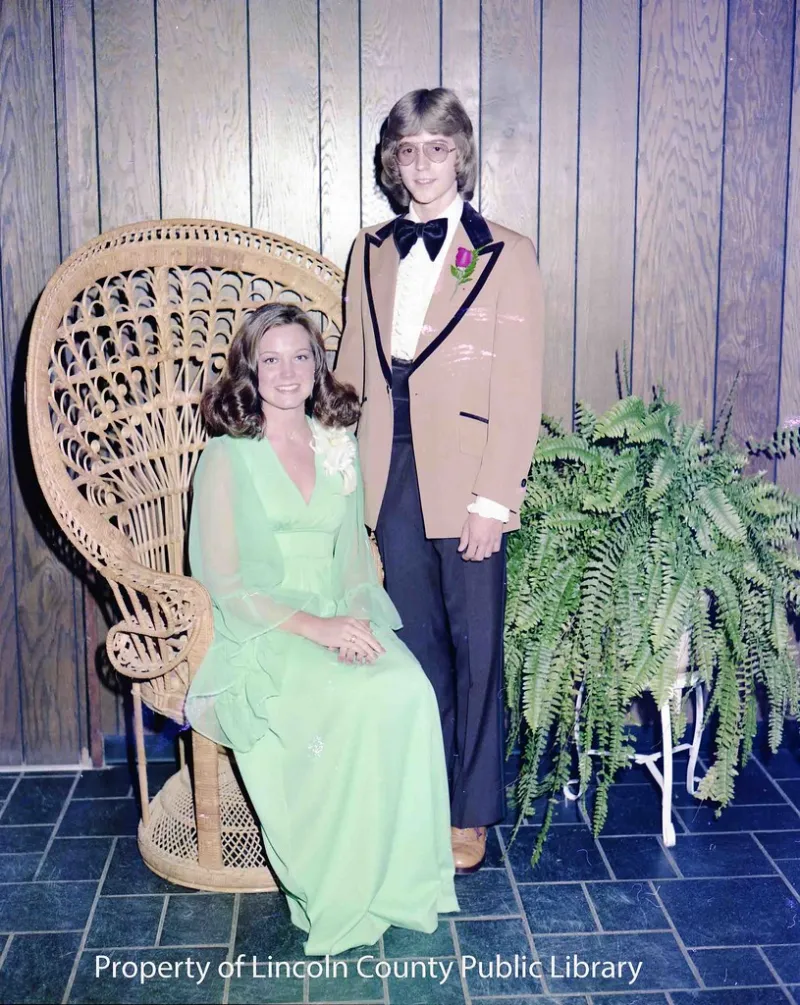
Photo: 1970s couple meeting at community social gathering americana, via live.staticflickr.com
In 1975, if you were a twenty-three-year-old in Columbus, Ohio, your romantic universe had a pretty clear boundary. It was roughly the size of your neighborhood, your workplace, your church or synagogue, and whatever social circles your friends and family could pull you into on a Friday night. That was it. That was the whole market.
And somehow, most people found someone.
Not because they were settling. Not because they lacked standards. But because the constraints of geography and community created a different kind of logic around love — one that was faster, more local, and in many ways more decisive than anything the modern dating landscape has produced.
The Accidental Architecture of Courtship
Pre-app American courtship wasn't a system anyone designed. It was just what happened when people lived in physical proximity and shared institutions. You met someone at your cousin's wedding. You noticed the woman who sat two rows ahead of you at church every Sunday. You got set up by a coworker who thought you'd hit it off with her college roommate.
These weren't romantic strategies. They were the byproduct of showing up in your life regularly. You encountered the same people, week after week, in contexts that revealed something real about who they were. You saw how they treated their parents. You watched how they behaved when something went wrong. You accumulated actual information, slowly, through repeated exposure.
There was no profile to curate, no best-angle photo, no carefully crafted bio. You got a person in three dimensions whether you wanted one or not.
The Speed of Commitment
One of the most striking things about courtship in the mid-twentieth century, compared to today, is how quickly it moved. The average age of first marriage in America hit its modern low point in the early 1960s — around 20 for women and 22 for men. Even by the late 1970s and early 1980s, most Americans were married before 25.
That's not because people were rushing carelessly into lifelong commitment. It's because the framework they were operating in didn't offer an alternative logic. When your dating pool is essentially your zip code, you don't spend years wondering whether someone better might appear if you just keep looking. You make a decision with the information you have, and then you invest in making it work.
Psychologists who study decision-making have a name for what happens when you introduce too many options: choice overload. The more alternatives you're aware of, the harder it becomes to commit to any single one — not because your options are worse, but because the awareness of other possibilities creates perpetual doubt. In 1970, that doubt was structurally limited. In 2024, it's essentially infinite.
The Church Basement and the Office Break Room
The two most reliable matchmaking institutions in pre-digital America were places that nobody thought of as matchmaking institutions at all: religious communities and workplaces.
Church wasn't just spiritual. It was social infrastructure. Weekly attendance meant weekly contact with the same group of people across years. Families knew each other. Young people were introduced by parents who trusted each other. The community itself had a vested interest in the pairings it produced, which created both accountability and support that extended well beyond the wedding day.
The office served a similar function, particularly as more women entered the workforce through the 1960s and 70s. Colleagues saw each other daily. They shared stress and small victories. They knew each other's work ethic and temperament before anyone had to ask. A significant percentage of American marriages from that era trace back to a shared lunch break or a company holiday party.
Both of these environments have eroded as matchmaking contexts. Remote work has thinned the office social fabric. Church attendance has declined steadily for decades. The institutions that once incidentally produced romantic connections have lost their density, and dating apps rushed in to fill the vacuum.
What the Algorithm Gave Us — and What It Took
It would be dishonest to pretend the old system was universally good. Geographic constraints kept many people trapped in relationships or communities that didn't fit them. Gay Americans faced a courtship landscape that was actively hostile. Women in particular often had limited agency in how the process unfolded. The nostalgia for simpler romantic times has a shadow side that deserves acknowledgment.
But the modern alternative has introduced its own specific problems, and they're worth naming clearly.
Dating apps have expanded the theoretical pool while paradoxically narrowing what people actually choose from. Studies consistently show that online daters filter more aggressively than they would in person — rejecting candidates based on a single photo or a job title in a way they never would if they'd met the same person at a party. The abundance of options creates a shopping mentality that's fundamentally at odds with the messiness of real human connection.
More than that, apps have changed the emotional posture people bring to early dating. When you know that a hundred more potential matches are a swipe away, there's less incentive to push through the awkward early stages of getting to know someone difficult or different. The friction that used to produce depth now just produces exits.
The Neighborhood Still Wins Sometimes
Here's a quiet counterpoint to all of this: studies on long-term relationship satisfaction still show that couples who met through mutual friends or shared communities tend to report higher satisfaction than those who met through apps. Not dramatically higher. But consistently higher.
The mechanism isn't mysterious. People who were introduced by someone who knew them both entered the relationship with context. They had a social network that overlapped. They were already embedded in each other's lives before they decided to build a life together.
That's what the church basement and the office break room were really doing. Not manufacturing romance. Just creating the conditions under which it could take root in ground that was already shared.
The apps haven't figured out how to replicate that. Maybe they can't. Some things require geography, time, and the particular magic of running into the same person enough times that you finally stop pretending you haven't noticed them.