Every Ten Years, a Stranger Knocked and America Tried to Count Itself
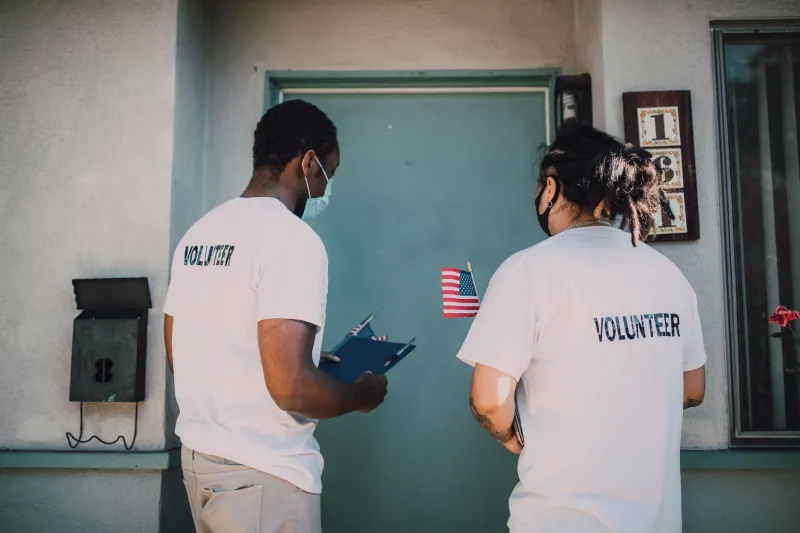
Sometime in the spring of a year ending in zero, a stranger came to your door. They carried a clipboard, a government badge, and a list of questions that hadn't changed much in decades: How many people live here? What are their ages? What do they do for work? The whole conversation lasted maybe ten minutes. You answered. They wrote it down. They left. And somewhere in Washington, your household became a data point in the most ambitious headcount a democracy had ever attempted.
That was it. That was how America knew who it was.
The Audacity of Counting Everyone
The U.S. Census is one of the oldest continuous government operations in the country, mandated directly by the Constitution and conducted every ten years since 1790. The founders needed it for a specific reason: congressional representation had to be tied to population, and someone had to figure out what that population actually was. So they built the mechanism into the founding document itself.
What they designed was, by necessity, a massive exercise in organized imprecision. You couldn't count 300 million people — or even the 3.9 million the first census found — without errors, omissions, and delays. Enumerators walked routes on foot or on horseback. They knocked on doors in cities and rode hours between farmhouses in rural territories. They recorded names and numbers by hand. People lied. People moved. People were missed entirely.
The count was always incomplete. Everyone knew it. They used it anyway, because an imperfect count taken once a decade was still the best picture anyone had.
The Decisions That Rode on a Clipboard
What's remarkable, looking back, is how much weight those imperfect numbers carried. Federal funding allocations, congressional district boundaries, school construction plans, highway routing decisions, hospital placement — all of it flowed from census data. State governments used it to plan infrastructure. Businesses used it to decide where to open stores. Developers used it to figure out where to build.
And all of that was based on a snapshot that was already aging the moment it was taken. The 1960 census was used to make decisions throughout the 1960s, even as the baby boom reshaped neighborhoods, the Great Migration moved hundreds of thousands of Black Americans from the South to Northern cities, and suburbs expanded at a pace no clipboard survey could track in real time. By the time the 1970 census arrived to update the picture, entire communities had transformed in ways the previous count had completely missed.
Planners knew this. They accounted for it as best they could, using estimates and projections and educated guesses to fill the gaps. It was an enormous, continuous act of inference — America perpetually trying to understand itself through data that was perpetually out of date.
The Human Texture of the Count
What gets lost in the policy discussion is how personal the census experience actually was. The enumerator who knocked on your door wasn't an abstraction. They were a neighbor, often a local hire, someone who knew the community they were counting. In small towns, the census worker might be your school principal's wife or the guy who ran the hardware store. In cities, they were often residents of the same neighborhood they were documenting.
That human contact produced data with a kind of texture that pure numerical collection can't replicate. Enumerators noted things that didn't fit neatly into boxes — households where the family structure was complicated, addresses where nobody answered but neighbors knew people lived there, situations that required judgment calls that a form couldn't anticipate. The data was messy because life is messy, and the people collecting it were part of the same messy life.
It also produced remarkable historical artifacts. Census records are now among the most-used genealogical resources in the country. Millions of Americans have traced ancestors through those handwritten ledgers, reading their great-great-grandparents' names in an enumerator's careful script, learning where they lived and what they did and how many children they had. The imperfect human count became an irreplaceable human document.
What Replaced the Clipboard
Today, the census still happens — 2020 was the most recent — but it exists in a world where it is no longer the primary way America understands its own demographics. That shift happened quietly and then all at once.
Credit card companies know, in real time, where Americans are spending money and on what. Smartphone location data tracks population movement at a granularity that would have seemed like science fiction to a 1960 census planner. Retail chains use purchasing patterns to identify neighborhood demographics with more precision than any decennial survey. Social media platforms know not just where you live but what you care about, what you buy, what you watch, who you talk to, and what time you go to sleep.
The government still asks its questions every ten years. But the private sector has been running its own continuous census for years, and it updates in real time, it never misses a household, and it never needs to knock on a door.
The Thing We Should Probably Think About
There's a version of this story that's simply about progress — we know more, faster, with greater accuracy. That's true. But there's another version that's worth sitting with.
The census, for all its imperfections, was a public process. The government asked. You answered. The data, with some restrictions, eventually became public. Researchers, journalists, and ordinary citizens could access it, analyze it, argue about it. The count belonged, in some meaningful sense, to the country being counted.
The real-time demographic data that has replaced it belongs to corporations. It's proprietary, largely invisible to the public, and used primarily to sell things. We traded a slow, imperfect, democratic count for a fast, precise, private one — and most of us didn't notice the transaction happening.
A stranger with a clipboard, it turns out, was collecting something more than numbers. They were participating in a ritual of public self-knowledge that no algorithm has quite managed to replicate. America counted itself. The count was wrong in a hundred ways. It was still, in some important sense, ours.