Picture Day Perfection: When One Annual Photo Carried the Weight of an Entire Childhood
The Night Before Picture Day
In households across America every October, the same ritual unfolded with the solemnity of a religious ceremony. Mothers laid out their children's best clothes on bedroom chairs, fathers tested the morning alarm clock twice, and kids went to bed early with strict instructions not to mess up their hair. Tomorrow was Picture Day—the one day of the school year when everything had to be perfect.
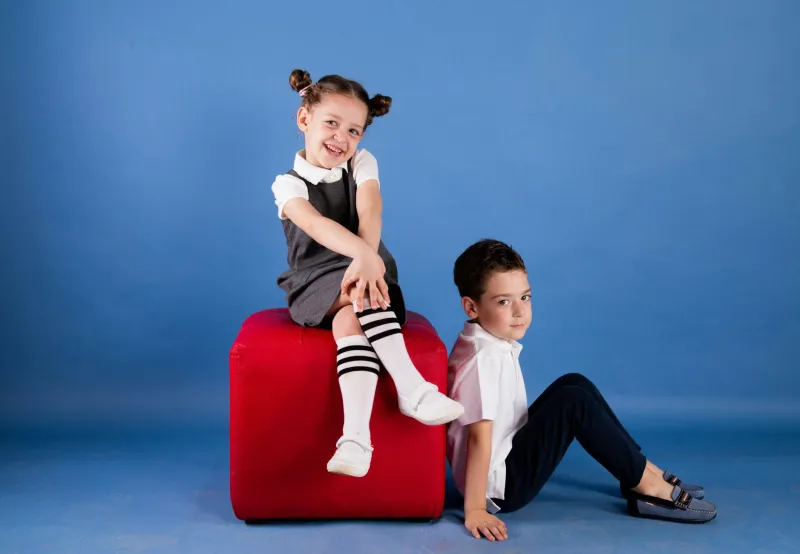
Seven-year-old Jennifer Martinez would spend the evening before practicing her smile in the bathroom mirror, trying to find the exact expression that would represent her entire second-grade year. Her mother would iron her favorite dress three times, check for loose buttons, and plan the morning schedule down to the minute. There would be no rushing, no forgotten lunch money, no last-minute wardrobe malfunctions.
 Photo: Jennifer Martinez, via i.pinimg.com
This wasn't just about taking a photograph—it was about creating a family heirloom.
Today, Jennifer's own daughter has appeared in over 3,000 digital photos since kindergarten started six weeks ago. The school's parent communication app delivers a steady stream of classroom candids, lunch table shots, and playground moments. The official school portrait, when it arrives, will compete for attention with dozens of other images from the same week.
The Economics of a Single Frame
In 1978, school pictures operated under the harsh economics of film photography. Each child got one shot—literally. The photographer had perhaps thirty seconds to capture the essence of a six-year-old's personality in a single frame. There were no do-overs, no "let's try that again," no digital editing to fix a crooked smile or messy hair.
Families invested heavily in this singular moment. Professional portrait packages cost real money—often equivalent to a week's worth of groceries. Parents ordered multiple copies: wallet-sized for grandparents, 5x7s for the family album, and an 8x10 for the living room wall. These weren't casual snapshots; they were formal documents of childhood that would be treasured for decades.
The photographer understood the gravity of the situation. Armed with professional lighting equipment and years of experience coaxing natural expressions from nervous children, they worked quickly but deliberately. "Look right here at the birdie," became a cultural touchstone because it represented the most important photographic moment in a child's year.
Modern school photography operates in a completely different universe. Digital cameras allow unlimited shots, immediate review, and instant retakes. Children pose for dozens of frames, with photographers selecting the best option from multiple angles and expressions. The process has become more forgiving but somehow less meaningful.
The Ritual of Preparation
Picture Day preparation began weeks in advance. Mothers scheduled haircuts with military precision, timing them to ensure hair would look perfect on the appointed day—not too fresh, not too grown out. Special clothes were purchased or borrowed, tried on multiple times, and stored safely away from everyday wear and potential stains.
The morning routine resembled a NASA launch sequence. Children were awakened early to allow extra time for grooming. Hair was combed, recombed, and sprayed into submission. Faces were scrubbed until they glowed. Clothing was inspected for wrinkles, lint, or any imperfection that might ruin the year's official portrait.
Breakfast was carefully chosen—nothing that might stain or cause an upset stomach. Many families skipped breakfast entirely, gambling that an empty stomach was safer than risking a syrup accident on a white collar.
This level of preparation created anticipation and anxiety in equal measure. Children understood that this day was different, important, and that their cooperation was essential to the family's success. The photograph they were about to take would represent them for an entire year.
The Weight of Permanence
School portraits carried an emotional weight that's difficult to comprehend in today's image-saturated world. These photographs would be the primary visual record of a child's growth, displayed prominently in homes and shared with extended family members who might not see the child regularly.
Grandparents treasured these annual portraits, often displaying years of school pictures in sequence to track their grandchildren's development. The progression from gap-toothed first grade to awkward middle school braces told the story of childhood in a way that felt both comprehensive and precious.
The photographs also served as historical documents. Decades later, adults would look at their school pictures and remember not just how they looked, but how they felt during that particular year. The formal pose, the carefully chosen outfit, the nervous smile—all of it captured a moment in time with startling clarity.
Because there was only one official photograph per year, it had to carry the full weight of representing that entire period of childhood. Parents scrutinized these images for signs of their child's personality, happiness, and development. A good school picture could provide reassurance that everything was going well; a bad one might prompt worried conversations about whether little Sarah was adjusting properly to third grade.
The Democracy of the School Photographer
School picture day was perhaps the most egalitarian photographic experience in American childhood. Every child, regardless of family income or social status, received the same professional treatment. The traveling school photographer didn't know or care whether you lived in the mansion on Elm Street or the apartment complex behind the grocery store—everyone got the same backdrop, the same lighting, the same thirty seconds of professional attention.
 Photo: Elm Street, via cdn.getyourguide.com
This equality extended to the final product. Rich kids and poor kids appeared in the yearbook with identical formatting, similar poses, and comparable quality. The school portrait was one arena where economic differences were temporarily invisible.
Modern family photography has largely eliminated this democratic element. Wealthy families hire professional photographers for elaborate sessions, while others rely on smartphone cameras and natural lighting. The quality gap between professional portraits and casual family photos has widened dramatically, creating new forms of visual inequality that didn't exist in the film era.
The Yearbook as Time Capsule
School portraits served a dual purpose: family keepsake and historical record. These carefully posed photographs would eventually appear in the school yearbook, creating a permanent archive of an entire generation's childhood.
Yearbooks became community time capsules, documenting not just individual children but the collective experience of growing up in a particular place and time. The hairstyles, clothing choices, and even the photography techniques captured cultural moments with anthropological precision.
Looking through old yearbooks revealed the rhythm of childhood development in ways that felt both personal and universal. The progression from kindergarten's missing teeth to senior year's mature confidence told a story that resonated across generations.
Today's digital photo albums lack this sense of permanence and community documentation. While families may have more photographs than ever before, they lack the shared experience of the annual portrait ritual and the collective memory-making that yearbooks provided.
The Anxiety of Perfection
Picture Day anxiety was a real and widespread phenomenon that affected children and parents alike. The pressure to look perfect for this one important photograph created stress levels that seem almost comical in retrospect—but the stakes felt genuinely high at the time.
Children worried about their hair cooperating, their smile looking natural, and their clothes staying clean until the crucial moment. Parents fretted about timing, logistics, and whether they'd adequately prepared their child for this important milestone.
The most dreaded outcome was the "retake"—the notice sent home announcing that your child's portrait had been unsuccessful and would need to be redone. Retake day carried the stigma of failure, the implication that you hadn't properly prepared for this fundamental childhood responsibility.
Modern photography has largely eliminated this anxiety through unlimited digital shots and instant review. While this reduces stress, it also diminishes the sense of occasion that made Picture Day feel significant.
The Lost Art of Anticipation
Perhaps the most profound difference between then and now lies in the element of anticipation. Families waited weeks to see their school portraits, creating a sense of suspense that's impossible to replicate in the age of instant digital preview.
When the portrait packages finally arrived, opening them became a family event. Everyone gathered around to see how the pictures had turned out, to critique the photographer's work, and to decide which relatives deserved copies.
The waiting period allowed families to build emotional investment in the outcome. By the time the portraits arrived, they'd already become precious through anticipation alone.
Instant digital photography has eliminated this waiting period and, with it, much of the emotional buildup that made school pictures feel special. When you can see the results immediately and take unlimited shots, no single photograph carries the weight of expectation that made Picture Day such a significant childhood milestone.
What We've Gained and Lost
The evolution from annual school portraits to constant digital documentation represents both tremendous gain and subtle loss. Today's children will have infinitely more visual records of their childhood, captured in higher quality and shared more easily than ever before.
But they'll also miss the concentrated anticipation, the sense of occasion, and the democratic equality that made Picture Day a shared cultural experience. The abundance of images has paradoxically made each individual photograph less precious, less meaningful, and less likely to be treasured for decades.
Understanding this trade-off doesn't require nostalgia for the limitations of film photography, but it might inspire us to occasionally treat photography with the intentionality and reverence that once made a single school portrait feel like the most important picture of the year.